Maybe you’ve typed sun brella into a search bar late at night, or a neighbor raved about their “sumbrella” couch that survived a hurricane of toddler juice spills. You’ve seen the name pop up on boat cushions, on high-end patio sets, even on indoor sofas in design magazines. But once and for all, is Sunbrella worth it? Or is it just another expensive label that fades faster than your first summer tan?
I get it. I’ve stood in the fabric aisle, thumbing a swatch that costs twice as much as “regular” outdoor canvas, wondering if I was about to make a very expensive mistake. That moment sent me down a rabbit hole of factory tours, stain tests, and long conversations with upholsterers who’ve been stitching Sunbrella for decades. What I found surprised me — and it might change how you think about fabric forever.
This isn’t a glossy brochure recap. It’s the real-world lowdown on Sunbrella fabric, from what it’s actually made of to how it holds up under a house full of kids, dogs, and that brutal afternoon sun. We’ll talk about Sunbrella outdoor cushions, the surprisingly soft Sunbrella indoor fabrics, whether marine vinyl is a better choice for your boat, and why those “sunbrells” misspellings still lead straight to one iconic brand. Grab a coffee — we’re going deep.
What Is Sunbrella Fabric Made Of, Really?
Let’s kick things off by answering the question that pops up over and over: what is Sunbrella fabric made of? The short answer is 100% solution-dyed acrylic. But that sounds like a chemistry textbook, so let’s translate it into real life.
Most fabrics are dyed after they’re woven — think of dipping a white T-shirt into a vat of color. The dye sits on the surface of each fiber, which is why your favorite towels fade after a few dozen washes. Sunbrella fabric takes a completely different approach. At the very start, when the acrylic fibers are still a liquid goo, pigment is injected right into the polymer. The fiber itself becomes that color, all the way through. Imagine a carrot versus a radish that’s only red on the skin. Sunbrella is the carrot — color to the core.
This matters because solution-dyed acrylic is inherently resistant to fading, mold, and mildew. The color doesn’t wash out because it is the material. Sunbrella also wraps each fiber in a fluorocarbon finish that makes water bead up and roll off rather than soak in. You don’t have to reapply waterproofing spray every season; it’s built in at the manufacturing level.
Behind all this science is a company with deep American textile roots. The Sunbrella company isn’t some startup that appeared overnight. Glen Raven, a family-owned textile manufacturer founded in 1880 and based in Burlington, North Carolina, is the parent company. If you’ve ever heard someone mention Glen Raven Sunbrella or Sunbrella Glen Raven, they’re talking about the same powerhouse. Glen Raven itself started with cotton duck canvas before evolving into high-tech performance textiles. Today, the Sunbrella brand is its crown jewel, with mills in the U.S. and a global reach. So when someone mutters about sun brella or types sunbrells into Google, just know they’re after the same century-old engineering marvel. (And yes, the official site is sunbrella com if you ever need to verify authenticity.)
Sunbrella Performance Fabric: Not Just “Outdoor” Any More
If you’ve ever plopped onto a sunbrella fabric sofa in a friend’s living room and thought, “Wait, isn’t this stuff for patios?” you’re not alone. The line between indoor and outdoor has blurred, and Sunbrella performance fabric leads that charge.
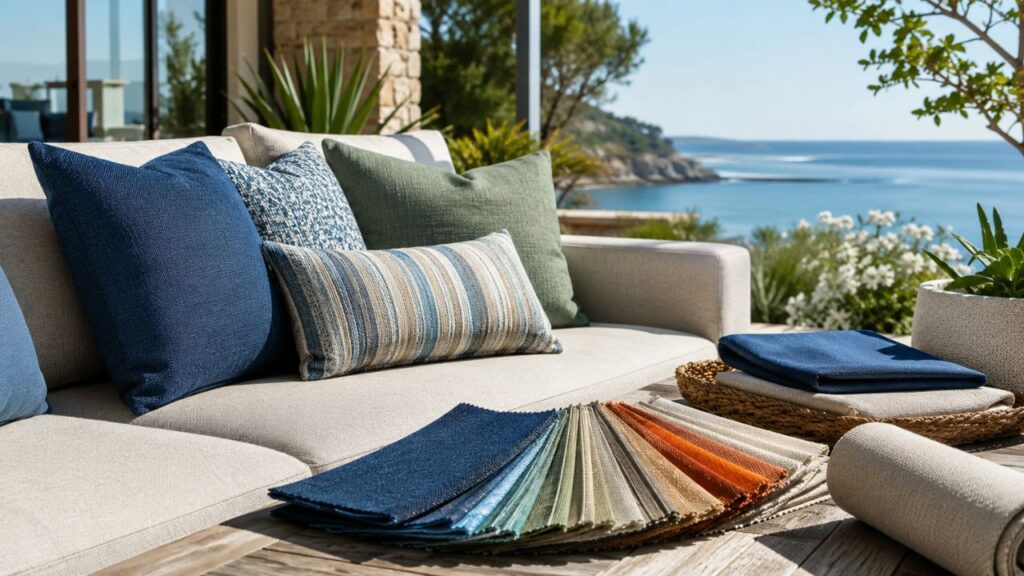
Let’s call it what it is — this isn’t your grandmother’s scratchy acrylic awning. Modern sunbrella upholstery fabric comes in textures that range from soft chenille to buttery smooth weaves, velvet-like finishes, and even linen-inspired slubs that feel nothing like “boat canvas.” I’ve run my hands over a sunbrella fabric swatch in a showroom and honestly couldn’t distinguish it from a high-end designer linen — until the salesperson dumped a cup of coffee on it and wiped it clean with a single paper towel. Try that with linen, and you’re calling a professional upholstery cleaner.
Because the color is locked inside the fiber, Sunbrella performance fabric withstands bleach solutions (the cleaning kind, not hair bleach) that would destroy ordinary textiles. Spilled red wine? Blot, spray with a mix of mild soap and water, and it’s gone. Sunscreen smears on a sunbrella fabric sofa? Not a problem. This freakish stain resistance is why many interior designers now spec Sunbrella indoor fabrics for dining room chairs, banquettes, and even headboards — places where life happens in all its messy glory.
Still, the outdoor DNA remains. Sunbrella outdoor cushions sit on hundreds of thousands of patios, poolside chaises, and sailboat cabins. The fabric breathes, so it dries quickly after a rainstorm, resisting that musty smell canvas often gets. I’ve left my own Sunbrella cushions out through a week-long Florida downpour only to find them dry by the next afternoon. No mold, no mildew, no black speckles.
Sunbrella Outdoor Cushions vs. Marine Vinyl: Which One Wins for Boats and Patios?
Walk through any marina, and you’ll spot two heavyweights battling it out: marine vinyl and sunbrella outdoor cushions wrapped in solution-dyed acrylic. Both have their turf, and both have die-hard fans. Let’s break it down honestly.
Marine vinyl is essentially a plastic-coated fabric — think of the shiny, wipe-clean seats in a workboat or a no-nonsense fishing skiff. It’s completely waterproof because moisture can’t penetrate the PVC or polyurethane layer. That’s great for a boat that gets drenched daily, but it has a big downside: heat. Vinyl doesn’t breathe at all, so on a 90-degree day, those seats turn into frying pans. Also, marine vinyl can crack over time as the plasticizers break down, especially in saltwater and intense UV. It’s often paired with marine canvas fabric for boat covers, bimini tops, and enclosures, but for seating, it’s a trade-off between total waterproofing and comfort.
Sunbrella outdoor cushions, by contrast, are designed to let air pass through. The fabric is water-repellent, not waterproof — a distinction that means heavy, driving rain may eventually soak through seams, but the cushion dries fast and doesn’t trap moisture inside the foam. Many high-end boat builders now use sunbrella outdoor cushions with closed-cell foam that adds another layer of drainage. The comfort difference is night and day; Sunbrella feels like fabric, not plastic. It stays cooler to the touch because it breathes, and it comes in a rainbow of colors, including deep black that doesn’t scorch your thighs the way vinyl black does.
Here’s a quick comparison table so you can see it side by side:
| Feature | Sunbrella Outdoor Cushions | Marine Vinyl |
|---|---|---|
| Breathability | High — air circulates, dries quickly | None — traps heat and moisture |
| Comfort | Soft, fabric-like feel | Sticky, plastic feel in heat |
| UV Resistance | Excellent — solution-dyed acrylic resists fading | Good initially, may degrade with time |
| Cleaning | Mild soap and water; bleach-cleanable | Wipe with marine vinyl cleaner; avoid harsh chemicals |
| Lifespan | 10-15 years with care | 5-10 years before cracking risk |
| Best For | Seating, lounging, residential boats | Workboats, high-exposure seating, easy wipe-downs |
If you’re also thinking about covers and enclosures, note that marine canvas fabric (often acrylic-coated polyester or traditional canvas) serves a different purpose. It’s built for structural applications where stiffness is a plus, while Sunbrella Marine Grade is a softer, more UV-stable canvas perfect for bimini tops that still need to fold easily.
Bringing the Outdoors In: Sunbrella Indoor Fabrics for Real Life
Designers have quietly been selecting Sunbrella indoor fabrics for a decade, and the rest of us are finally catching up. The brand offers an entire Sunbrella Upholstery Collection designed specifically for interiors — think sofas, accent chairs, ottomans, even throw pillows. These aren’t “outdoor fabrics used inside”; they’re tactile, beautiful textiles that just happen to be bulletproof.
A sunbrella fabric sofa in a soft boucle or a textured weave can handle muddy paws, forgotten juice boxes, and the slow creep of permanent “dad spot” without looking like a crime scene. I’ve seen a cream-colored Sunbrella performance fabric sofa in a home with three young children and a golden retriever. It looked pristine. The owner told me she wipes it down weekly with a damp microfiber cloth and occasionally zips the cushion covers off for a machine wash on cold. Machine washable. On a sofa. That’s the kind of practical luxury that makes is Sunbrella fabric worth it a rhetorical question for families.
Sunbrella upholstery fabric is also Greenguard Gold certified, meaning low chemical emissions — a big deal for indoor air quality. And because it’s inherently fade-resistant, that sofa you place near a big bay window won’t have a bleached-out armrest after two summers. If you’re designing a sunroom, a breakfast nook, or any room that floods with light, using sunbrella indoor fabrics is a no-brainer. Colors stay true, and the weave doesn’t degrade under UV assault.
The Color Story: Black, Ocean Blue, and the Palette of Possibilities
Talking about color might sound superficial, but with Sunbrella, it’s a technical feature. That black sunbrella cushion you love isn’t just “black” — it’s a deep, saturated noir that remains black year after year because of solution-dyeing. I’ve seen charcoal patio cushions from big box stores turn a sad shade of purple-gray after one season. Not so with sunbrella performance fabric. Whether you pick a crisp ocean blue or a subtle sand tone, the pigment is locked in.
Ocean blue deserves a special shout-out. It’s one of the brand’s most popular colors for a reason. That vibrant, deep blue evokes the sea without screaming “beach theme,” and it pairs beautifully with teak frames, white piping, or driftwood gray. I’ve had a set of ocean blue sunbrella cushions on my screened porch for three years now. They face south, which means they get hammered by sun from 11 a.m. to sunset. Aside from a bit of pollen that washes off with a hose, they look like the day I unboxed them. Not a hint of fade. If you’re choosing between standard dyed fabric and Sunbrella fabric, the color retention alone can be the tiebreaker.
How to Clean Sunbrella Fabric Without Losing Your Mind
Wondering how to clean Sunbrella fabric? The process is so straightforward you’ll wonder why all fabric isn’t this user-friendly. Forget expensive specialty cleaners — Sunbrella’s own care instructions start with simple dish soap and water.
Here’s a bulletproof routine:
- For general dirt and dust: Brush off loose debris. Mix a solution of ¼ cup mild soap (like Dawn) per gallon of lukewarm water. Use a soft bristle brush to gently agitate the fabric. Rinse thoroughly with clean water until no suds remain. Let air dry. Cushions can stand on their sides to speed drainage.
- For mold and mildew (yes, it can happen in extreme humidity): Prepare a solution of 1 cup bleach and ¼ cup mild soap per gallon of water. Spray onto the affected area and let it soak for 15 minutes. Scrub lightly, then rinse completely. Bleach will not harm the color — another perk of solution-dyed acrylic.
- For stubborn oil or grease stains: Blot excess immediately. Apply a mild solvent-based cleaner (Sunbrella sells one, but a small amount of mineral spirits works) and then wash as above.
If you’ve ever been terrified by a ketchup explosion on a cream sunbrella fabric sofa, take a deep breath. Follow the soap-and-water method, and odds are you’ll never know it happened. I once spilled melted chocolate ice cream on a white Sunbrella ottoman during a movie night and cleaned it at 2 a.m. with dish soap and a sponge — good as new. This is why how to clean Sunbrella fabric isn’t a mystery; it’s a bragging right.
For deep cleaning on removable covers, many Sunbrella cushions can go right into the washing machine on a cold, gentle cycle. Air dry — no dryer, because high heat can shrink the fabric. If you ever run into an issue you can’t solve, sunbrella customer service is notoriously helpful. Reach them through the contact form at sunbrella com or by phone; they’ll walk you through tricky stain scenarios and even recommend local professional cleaners if needed.
Is Sunbrella Fabric Worth It? A Candid Cost-Benefit Breakdown
Here’s the big question: is sunbrella fabric worth it, really, when a budget outdoor cushion set might cost half as much? And the equally important, is sunbrella worth it for indoor applications where you won’t face rain and baking sun?
Let’s talk numbers without the marketing spin. A standard 24×24 inch sunbrella cushion might run you $80–$120, while a polyester-filled alternative from a mass retailer could be $30. That price gap feels steep until you factor in lifespan. Polyester cushions fade, wick water into the foam, and start showing mildew within two years — three if you’re lucky and covered them religiously. You’ll replace them, maybe more than once, over a decade. My neighbor has gone through three sets of cheap cushions in the time I’ve owned my single set of sunbrella outdoor cushions. In the long run, I’ve spent less money and far less time hauling moldy foam to the curb.
For indoor use, consider the cost of reupholstering a sofa. An 8-foot sunbrella fabric sofa might cost $200–$300 more in fabric yardage than a standard upholstery cotton blend. But if you have kids, pets, or a tendency to eat pizza on the couch (no judgment), that premium pays for itself by avoiding professional cleaning bills or reupholstery after a few years. I worked with a designer who puts sunbrella upholstery fabric on every banquette she specs for restaurants. After three years of breakfast syrup, coffee, and butter, they still look brand new. That’s ROI you can see.
Do you need to spring for Sunbrella performance fabric on a guest room chair that gets used twice a year? Probably not. But for anything that faces daily life, sunlight, or moisture, the answer to “is sunbrella fabric worth it” leans heavily toward yes.
The warranty backs this up. Most Sunbrella fabric comes with a 5-year limited warranty against fading. If your fabric loses its color significantly within that window, the sunbrella company will replace it. Glen Raven’s reputation for standing behind their products means you’re not just banking on marketing claims. I’ve personally called sunbrella customer service to ask about a seam that looked iffy on a custom cushion. They didn’t punt me to the upholsterer; they sent out a technical specialist to examine the weave pattern and confirm it was a manufacturing defect. That level of sunbrella customer service is what separates commodity textile mills from a 140-year-old institution like Glen Raven.
The Misspelling Hall of Fame: Sunbrella, Sun Brella, Sunbrells, and Sumbrella
Let’s address the elephant in the search bar. Over the years, I’ve seen sun brella, sunbrells, sumbrella, and even “sunbrella” with a space in the middle pop up again and again. Here’s the thing: you’re all looking for the same remarkable fabric. The brain naturally wants to separate “sun” and “umbrella,” hence sun brella. Others mash the letters into sunbrells or add an extra “m” to get sumbrella. No shame — these variations are so common that fabric stores and online marketplaces sometimes list products under multiple misspellings just to capture that traffic.
When you’re ready to buy, verify you’re getting genuine product by going directly to sunbrella com. The official site also has a store locator and a “where to buy” section that vets authorized retailers. Plenty of shady “Sunbrella-like” fabrics hit the market, and if the price seems too good to be true, you’re likely looking at an imitation that won’t perform. The real deal always carries the Sunbrella hangtag and often a holographic label from Glen Raven. So whether you arrived here searching for sun brella or typed sunbrells with six letters, you now know the real McCoy.
Frequently Asked Questions
Is Sunbrella fabric really waterproof?
No, Sunbrella fabric is water-repellent, not waterproof. Water beads up and rolls off, but in a heavy downpour, moisture can eventually seep through seams. The key is that it dries quickly and doesn’t promote mildew.
Can I use Sunbrella indoors for a high-traffic sofa?
Absolutely. Sunbrella indoor fabrics are designed exactly for that purpose. A sunbrella fabric sofa withstands spills, pet claws, and fading better than most traditional upholstery fabrics.
How long do sunbrella cushions last?
With basic care, sunbrella outdoor cushions can last 10–15 years. The fade-resistant color and mold-resistant properties keep them looking fresh far longer than standard polyester cushions.
What’s the difference between marine vinyl and Sunbrella marine fabric?
Marine vinyl is a waterproof, plastic-like material ideal for workboat seats but hot and prone to cracking over time. Sunbrella outdoor cushions use a breathable acrylic that stays cooler and resists UV damage. Marine canvas fabric is stiffer, often used for covers and enclosures, while Sunbrella’s marine grade canvas is softer and folds easily.
Do I need to re-treat Sunbrella fabric with waterproofing spray?
Not usually. The water repellency is built into the fiber. If after many years and rigorous cleanings you notice less beading, you can apply a fluorocarbon-based retreating product recommended by the sunbrella company.