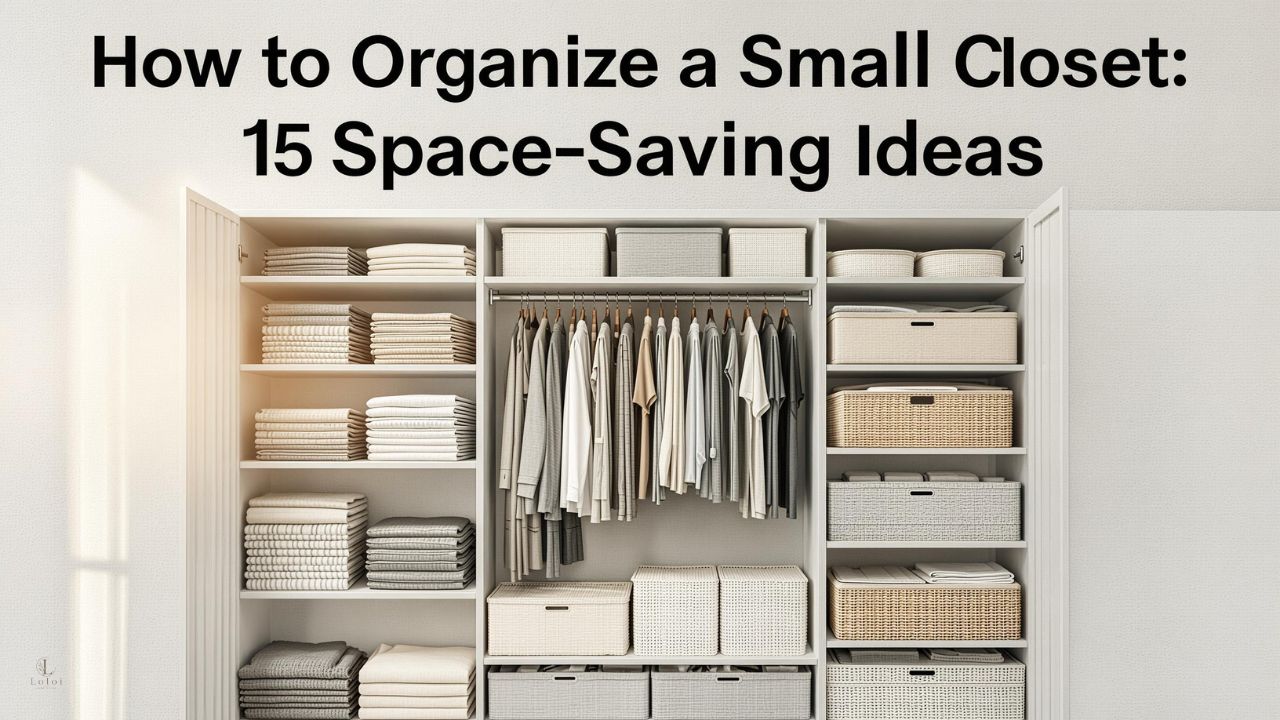
That sinking feeling when you open your closet doors and a small avalanche of shoes, hangers, and last season’s sweaters tumbles out? You know it all too well. Learning how to organize a small closet isn’t just about creating a pretty space—it’s about rescuing ten minutes of your morning routine and starting each day without frustration.
The truth is that most homes, especially apartments and older houses, weren’t built with wardrobe storage in mind. But here’s the good news: you don’t need a walk-in the size of a guest bedroom to feel organized. With the right small closet organizer system and a few clever strategies, even the most cramped reach-in can function like a boutique dressing room.
In this guide, we’ll walk through practical small closet ideas that work for real people with real budgets—from renters who can’t drill holes to DIY enthusiasts ready to install small closet shelving. You’ll learn exactly how to assess your space, choose the best closet organizer ideas, and maintain order long after the initial purge.
Why Most Small Closets Fail (And How Yours Won’t)
Before we dive into solutions, let’s identify the three core problems that make organizing a small closet feel impossible. Understanding these pain points will help you avoid common mistakes and choose strategies that actually stick.
The visibility problem. When you can’t see what you own, you forget you own it. That leads to buying duplicates, wearing the same three outfits, and feeling like you have “nothing to wear” despite a stuffed closet.
The access problem. Stacked bins, double-hung rods that are too close together, and deep shelves that turn into black holes all make it difficult to retrieve or put away items. If something is hard to reach, you won’t put it back—and chaos follows.
The mismatch problem. Most closet small spaces come with a single rod and one high shelf. That configuration works for exactly zero real humans. You need zones for different types of clothing, shoes, accessories, and out-of-season gear.
Your goal isn’t to cram more in. It’s to create a system where everything has a visible, reachable home. Let’s build that system step by step.
Step 1: The Empty-Closet Audit (Do This Before Buying Anything)
You’re probably tempted to run out and buy bins, dividers, and a narrow closet organizer system immediately. Resist that urge. The first step in how to organize a small closet requires zero spending and maximum honesty.
Empty your closet completely. Every single item goes on your bed or floor. Now you have a blank canvas. Before you put anything back, ask these three questions about each item:
- Have I worn this in the last 12 months? (Seasonal items get a pass if you live in a four-season climate)
- Does it fit me well right now?
- Do I feel good when I wear it?
If an item fails two of these questions, it belongs in a donation box or the trash. Be ruthless. Most people discover that 20-30% of their closet contents can leave immediately.
Now look at what remains. Sort everything into piles: tops, bottoms, dresses, jackets, shoes, accessories, out-of-season gear. This sorting process reveals exactly what types of storage you need. Lots of folded sweaters? You need shelves or drawers. Twenty pairs of shoes? A dedicated shoe solution is non-negotiable.
Step 2: Choose Your Small Closet Organizer Strategy
With your inventory sorted, you can now select the right closet organizer approach for your specific space and budget. Here are the three most effective paths.
Strategy A: The No-Drill, Renter-Friendly Method
If you rent or don’t want to commit to permanent changes, focus on tension rods, over-door hooks, and standalone units. A narrow closet organizer that sits on the floor—like a slim tower of drawers or a shoe rack—adds storage without screws. Tension rods can create a second hanging level below your existing rod. Over-door organizers hold shoes, bags, or cleaning supplies. This approach won’t maximize every square inch, but it transforms a dysfunctional space for under $100.
Strategy B: The Semi-Permanent Upgrade
For homeowners or long-term renters with permission, installing small closet shelving and adjustable systems offers the best value. Brands like ClosetMaid and Rubbermaid sell wire or laminate kits that attach to existing walls with basic tools. You can configure these systems with double hanging rods, shelves, and drawers. Expect to spend $150–$400 depending on the size of your closet. This is the sweet spot for most people learning how to organize closet spaces effectively.
Strategy C: The Custom Build (DIY Small Closet Ideas)
If you enjoy weekend projects and own a saw, drill, and level, diy small closet ideas can give you a fully customized space for less than prefab systems. Use plywood or melamine boards to build floor-to-ceiling shelves, add drawer boxes, and create specific zones for your inventory. This approach requires planning and patience, but the result fits your belongings perfectly. For inspiration, search small closet ideas pinterest to see real-world DIY transformations.
Step 3: Master the Layout – Small Closet Design That Works
The layout small closet design you choose determines whether your system functions or frustrates. Most closets fall into one of three configurations. Here’s how to optimize each.
The Single-Rod Reach-In (Most Common)
This closet has one rod running across the width, usually with a high shelf above. The standard fix is adding a second rod underneath. Hang shorter items like shirts, blouses, and folded pants on top. Use the lower rod for kids’ clothes, shorts, or additional shirts. The space above the top rod (if you have high ceilings) can hold out-of-season bins or bulky sweaters in vacuum bags.
The Double-Door Corner Closet
Often found in primary bedrooms, these closets have two doors that meet in the middle. The interior usually has a rod on each side. The biggest issue is the inaccessible corner where the rods meet. Solve this by removing the corner rod section entirely and installing corner shelves instead. Use that space for folded jeans, sweaters, or shoe boxes.
The Deep But Narrow Closet
Some closets are only 24–30 inches wide but extend 36 inches deep. That depth creates a “stuff黑洞” where items get lost. Never stack more than two deep on any shelf. Better yet, install pull-out drawers or sliding baskets that bring the back of the shelf to you. A narrow closet organizer on wheels can also slide into the depth and roll out when needed.
Step 4: Smart Small Closet Shelving and Storage Solutions
Now let’s talk specifics. Here are the highest-ROI storage products and techniques for closet organization ideas that deliver real results.
Double Hanging Rods
This single change doubles your hanging space instantly. Install a second rod 40 inches above the floor for shirts and folded pants. The upper rod should sit around 80 inches high for long items like dresses and coats. If your ceiling exceeds 8 feet, add a third rod or high shelf.
Vertical Shelf Dividers
Folded stacks always topple. Vertical dividers—which you can make from cardboard, acrylic, or wood—keep each category separate. Use them for jeans, sweaters, purses, or linens. Label the front of each section if you share the closet with a partner or kids.
Door-Mounted Organizers
The inside of your closet door is prime real estate. Over-door racks with clear pockets hold shoes, scarves, belts, or small bags. Wire racks attached to the door (using over-the-door hooks) provide instant closet storage for cleaning supplies or folded towels if your closet doubles as a linen closet.
Pull-Out Baskets
Deep shelves become useful when you add pull-out wire baskets. Mount slides to the shelf surface and attach baskets that glide forward. Use these for socks, underwear, workout gear, or t-shirts. No more digging into dark corners.
Slim Hangers
Swap mismatched plastic and wire hangers for uniform slim velvet or rubberized hangers. These take up 50% less rod space and prevent clothes from slipping off. A standard 36-inch rod holds about 60 bulky plastic hangers or 120 slim velvet hangers. That difference alone can solve your capacity problem.
Step 5: How to Organize a Small Closet with Lots of Clothes
Some days it feels like your wardrobe multiplied overnight. If you genuinely own more clothes than your space can hold—even after decluttering—you need advanced strategies for how to organize a small closet with lots of clothes.
Capsule the core. Keep only your current-season favorites easily accessible. Pack the rest into labeled bins or vacuum bags and store them elsewhere—under the bed, in a hall closet, or on the highest shelf. Rotate seasonally.
Roll, don’t fold. Rolling t-shirts, jeans, pajamas, and casual tops creates more compact, visible storage than flat folding. Rolled items stand upright in drawers or bins, allowing you to see every option at a glance.
Use the back of the door for accessories. Belts, ties, necklaces, and scarves take up zero hanging space when stored on a door-mounted rack. Add small command hooks for frequently worn hats or bags.
Go vertical with shoes. Stackable shoe shelves or over-the-door shoe pockets hold far more than a floor rack. For boots, use boot shapers or clips to hang them from a rod by their cuffs.
Create a weekly staging area. If you wear five outfits per week for work, hang those together on a separate section of the rod. Move the rest to the back. This “front section” approach makes getting dressed faster and reduces daily decision fatigue.
Step 6: Simple Closet Cabinet Design for Folded Items
Not everything should hang. Heavy sweaters, knitwear, jeans, and delicate fabrics last longer when folded. But piled-up stacks on a plain shelf create frustration. A simple closet cabinet design solves this with minimal effort.
Think of your lower closet section as a cabinet. Add:
- Drawer boxes that slide out. You can buy premade fabric drawers or build shallow wooden boxes on slides.
- Cubby inserts that divide a shelf into smaller compartments. Each cubby holds one category—pajamas, workout leggings, t-shirts.
- Labeled bins for off-season or seldom-used items. Clear bins show contents at a glance; fabric bins look tidier but require labels.
The goal is to eliminate stacking. Every folded item should sit in a space where you can see and grab it without disturbing its neighbors.
Step 7: Small Space DIY Small Closet Ideas for Under $50
You don’t need a big budget to transform your closet. These small space diy small closet ideas use common materials and basic tools.
Tension rod shoe shelf. Install two tension rods vertically between your existing closet shelf and the floor. Slide heels or flats between the rods. Each “slot” holds one pair.
Cardboard drawer dividers. Cut cardboard strips to fit inside existing drawers. Notch them halfway and slide together to create a grid. Perfect for socks, ties, or underwear.
Pegboard accessories wall. Attach a small pegboard to the back wall of your closet. Use hooks to hang jewelry, hats, scarves, or bags. Paint the pegboard to match your walls for a built-in look.
Pant hanger flip-flop rack. Clip flip-flops or sandals to the same metal hangers you use for pants. Hang them on the rod next to your shoes. Zero floor space required.
Wine rack for rolled items. A wall-mounted wine bottle rack (the kind with individual slots) holds rolled t-shirts or leggings perfectly. Install it on an empty wall section inside your closet.
Step 8: Mistakes That Ruin Small Closet Organization
Even with the best intentions, certain habits destroy closet organization ideas over time. Avoid these common traps.
Buying bins before measuring. That pretty woven basket might not fit your shelf depth. Always measure height, width, and depth before purchasing any container.
Overstuffing the rod. If your clothes touch or you have to push hangers aside, you’ve exceeded capacity. Remove 20% of the items or add a second rod.
Forgetting about airflow. Solid bins and tightly packed shelves trap moisture, leading to mildew smells. Leave gaps between items and use wire baskets or ventilated bins when possible.
Using mismatched hangers. That one wire hanger from the dry cleaner? It bends out of shape and tangles with neighbors. Uniform hangers keep everything orderly.
Neglecting the floor. Shoes piled on the floor create clutter and make vacuuming impossible. Every pair needs a designated home off the floor.
Real-Life Example: A 2×4 Foot Closet Transformation
Let’s walk through a typical small closet makeover. Sarah rents a one-bedroom apartment with a reach-in closet measuring just 24 inches deep by 48 inches wide. Her before photos show a single rod with 60 items crammed together, one high shelf piled with random bins, and a floor covered in loose shoes.
After emptying and decluttering, she removed 40% of her clothes. She installed a second tension rod (no screws allowed) at the 40-inch height, creating two hanging sections. She added a narrow three-drawer narrow closet organizer unit on the floor for folded jeans and sweaters. An over-door shoe rack holds 12 pairs. The high shelf now contains two labeled bins: winter accessories and handbags.
Total cost: $62. Total time: 3 hours. The result: a calm, functional space where she finds everything immediately.
How to Maintain Your Organized Small Closet
The best small closet solutions fail without a maintenance routine. Schedule these three habits.
The weekly reset (5 minutes). Every Sunday, return any out-of-place items to their zones. Fluff folded stacks. Straighten hangers.
The monthly purge (15 minutes). Scan for items you haven’t worn since last month. Move them to a “maybe donate” box. After three months, donate whatever remains in that box.
The seasonal swap (1 hour). When seasons change, rotate your core wardrobe. Store off-season items in vacuum bags or bins on the highest shelf or under the bed. Bring forward the next season’s clothing.
FAQ
How do I start organizing a small closet if I feel overwhelmed?
Begin with one small category, not the whole closet. Empty just your shoe collection or just your t-shirts. Organize that single category completely, then move to the next. Small wins build momentum without burnout.
What is the best small closet organizer for a rental?
Tension rod systems and over-door organizers require no permanent changes. Look for adjustable wire shelves that press between the floor and your existing shelf. These hold significant weight without screws or adhesive.
Can I organize a small closet without buying anything?
Yes. Sort everything into keep, donate, and trash piles first. Use shoeboxes as drawer dividers. Remove the closet rod completely and fold all items on shelves if that works better for your wardrobe. Repurpose shipping boxes as shelf bins.
How do I organize a small closet for two people?
Divide the closet vertically. One person takes the left half, the other takes the right. Use separate color-coded hangers or drawer bins. Add a third section in the middle for shared items like linens or outerwear.
What small closet ideas work best for deep but narrow closets?
Pull-out drawers or rolling carts turn unusable depth into functional storage. Install drawers that slide forward, or buy a narrow rolling cart that fits the width and rolls out for access. Never stack more than two bins deep.
How often should I reorganize my small closet?
Perform a full reorganization every six months when you swap seasonal clothing. Between seasons, maintain with weekly resets and monthly purges. This rhythm keeps clutter from accumulating.
Are expensive closet systems worth the money for small spaces?
Not usually. A $1,000 custom system won’t perform better than a $200 semi-permanent kit for a standard reach-in closet. Invest your budget in quality hangers, drawer dividers, and lighting (a stick-on LED motion light makes a huge difference).
What is the #1 rule for how to organize a small closet?
Store items at the point of use. Keep daily-wear clothes at eye level and waist height. Put occasional items on high shelves. Store off-season gear completely outside the closet if possible. Every item’s home should be the most convenient spot for its frequency of use.
Conclusion
Learning how to organize a small closet isn’t about finding magical products or trick storage hacks. It’s about matching your specific wardrobe to your specific space using intentional systems. Start with the empty-closet audit, choose the right closet organizer ideas for your budget and living situation, and commit to simple maintenance habits.
That small, chaotic closet of yours has more potential than you realize. Whether you install small closet shelving, build diy small closet ideas on a Saturday afternoon, or simply add a tension rod and slim hangers, every small change adds up to a morning routine that feels lighter, calmer, and more efficient.
Open your closet doors tomorrow. Imagine reaching for exactly what you want without digging, shoving, or sighing. That reality is one afternoon of focused work away. You’ve got this.