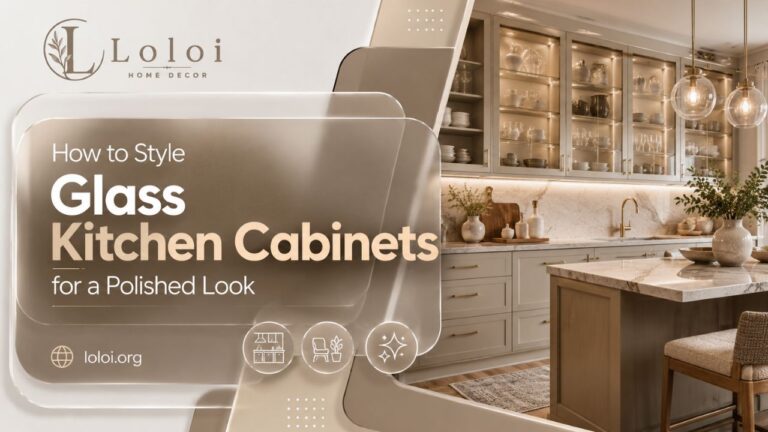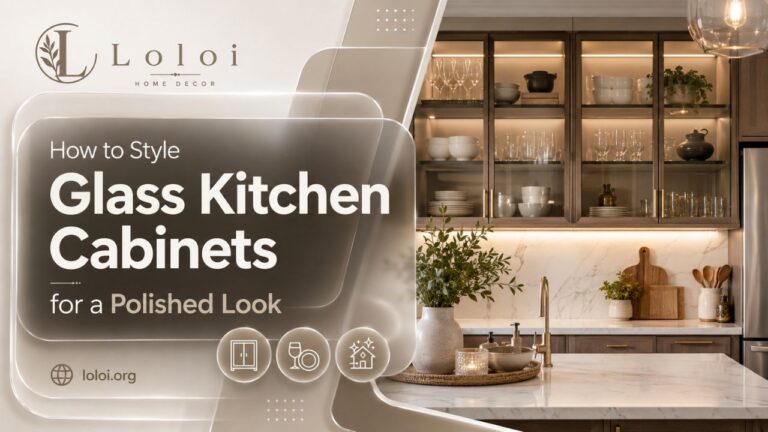
Glass-front cabinetry can make a kitchen feel brighter, larger, and more personal—but it can also expose every mismatched mug and crowded shelf. Learning how to style glass kitchen cabinets is really about finding the balance between beauty and everyday usefulness.
The goal is not to create a display that looks untouched. It is to make your glass kitchen cabinets feel intentional while still holding the dishes, glasses, and serving pieces you actually use. With a simple color palette, thoughtful spacing, and a few practical styling rules, even ordinary kitchenware can look polished behind glass.
Start With the Purpose of Your Glass Cabinets
Before moving a single plate, decide what each cabinet needs to do. Some glass front kitchen cabinets are primarily decorative, while others must work as daily storage. A cabinet near the dishwasher may need to hold drinking glasses and plates. A cabinet above a coffee station might display mugs, a small teapot, and coffee accessories. A corner unit may be better for attractive serving pieces that are used less often.
This decision prevents a common mistake: styling every shelf as if it were a showroom. A practical kitchen with glass cabinets should still support the way you cook, serve, and clean. Keep high-use pieces within comfortable reach, reserve upper shelves for occasional items, and avoid placing fragile decor where it must be moved every day.
How to Style Glass Kitchen Cabinets With a Clear Plan
The easiest way to understand how to style glass kitchen cabinets is to treat each cabinet as a small composition. Instead of filling shelves item by item, think in groups. A stack of plates can be one visual group, a row of glasses another, and a small bowl or pitcher a third. These groupings create rhythm and keep the shelves from looking random.
Start by emptying the cabinet completely. Clean the shelves, wipe the interior corners, and inspect the glass kitchen cabinet doors for fingerprints or haze. Then sort everything you removed into categories: everyday dishes, glassware, serving pieces, decorative objects, and items that belong somewhere else.
Choose a Limited Color Palette
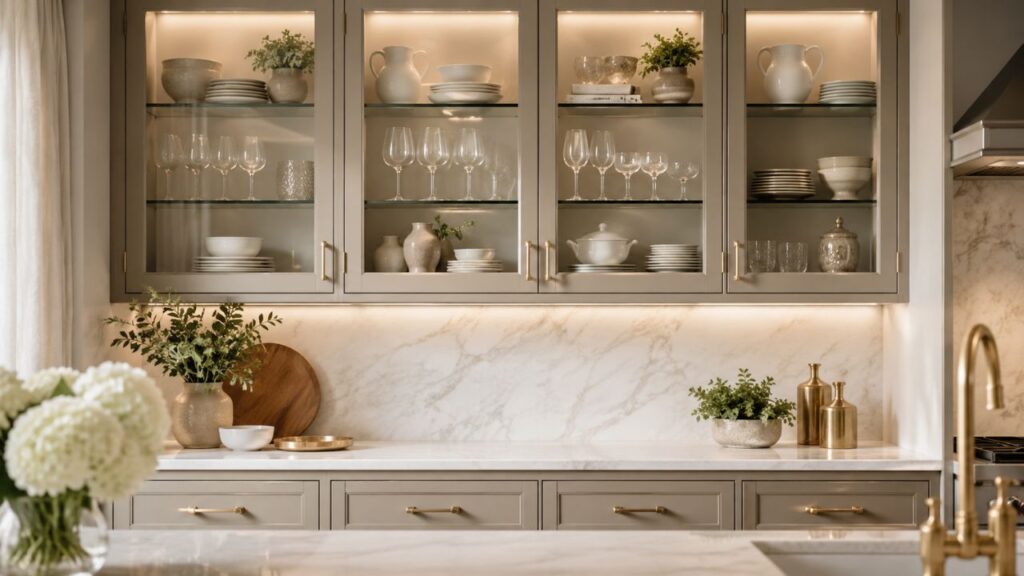
A restrained palette is one of the fastest ways to make kitchen cabinets with glass doors feel cohesive. White dishes are popular because they reflect light and work with nearly every cabinet finish. Clear glassware adds sparkle without introducing visual clutter. Wood, woven textures, black accents, or one muted color can add warmth and contrast.
For example, white glass kitchen cabinets can be styled with white ceramics, pale wood boards, and clear tumblers for a soft, airy look. Dark wood cabinetry may look richer with cream stoneware, amber glass, and brass details. In a colorful kitchen, repeat one or two tones from the backsplash, island, or walls inside the cabinets.
You do not need everything to match. The pieces simply need a visual relationship. A collection of cream, ivory, and soft gray dishes often looks more natural than a perfectly identical set.
Create Repetition Across Shelves
Repetition makes a display feel designed. Repeat the same material, color, or shape in several places. Clear glasses on one shelf can be echoed by a glass pitcher above. A small blue bowl can relate to blue-patterned plates on another shelf. Matching stacks on either side can help wide glass upper cabinets feel balanced.
Avoid repeating so much that the cabinet feels like a store display. The best glass kitchen cabinet decor has enough consistency to look calm and enough variation to feel personal.
What to Put in Glass Kitchen Cabinets
Many homeowners wonder what to put in glass kitchen cabinets because not every kitchen item deserves to be on display. The most reliable choices are objects that are useful, attractive, and easy to group.
Good options include:
- Everyday plates, bowls, and mugs in a coordinated palette
- Clear or tinted drinking glasses
- Serving bowls, cake stands, and pitchers
- Teapots, coffee cups, and small trays
- Cookbooks with attractive spines
- Glass storage jars for tea, coffee, or dry goods
- Ceramic vases, small baskets, or sculptural bowls
- Heirloom dishes used for special occasions
When deciding what to display in glass kitchen cabinets, look for pieces with clean silhouettes and consistent colors. Highly branded packaging, plastic containers, chipped dishes, and crowded stacks usually look better behind solid doors.
Display Everyday Dishes Beautifully
Everyday dishes can look surprisingly elegant when arranged with care. Stack dinner plates in groups of four to eight, place bowls beside or above them, and keep mugs together rather than scattering them. Plate stands can turn one or two patterned dishes into vertical accents.
When considering how to display dishes in glass kitchen cabinets, combine horizontal and vertical arrangements. A stack of plates adds stability, while a single upright platter creates height. Leave enough room around each group so the shapes remain easy to see.
Use Glassware to Reflect Light
Clear glasses are ideal for a glass cabinet kitchen because they visually disappear while catching light. Arrange glasses by height and type, keeping the tallest pieces at the back when shelves are deep. Stemware can be grouped in pairs or rows, but avoid packing it too tightly.
Colored glass can become a focal point. Amber, green, blue, or smoky glass works especially well when the rest of the display is neutral. Use one color family rather than mixing many unrelated shades.
Add a Few Decorative Objects
Decorative pieces should support the dishes, not compete with them. A small vase, framed recipe card, vintage scale, or ceramic figure can give a glass cabinet display personality. One meaningful object often has more impact than several tiny accessories.
This is especially helpful when planning kitchen glass cabinet decor ideas for cabinets that are not used every day. A decorative upper cabinet can hold heirloom china, a collection of pitchers, or seasonal serving pieces without sacrificing convenient storage.
How to Style Upper Glass Kitchen Cabinets
The challenge of how to style upper glass kitchen cabinets is visibility, and this is an important part of learning how to style glass kitchen cabinets in a real, working home. Because these cabinets sit at eye level, their contents become part of the room’s overall design. Keep the most attractive and frequently used items on the lower shelves, where they are easiest to see and reach.
Use upper shelves for lightweight serving pieces, decorative bowls, or objects that fill vertical space. Tall pitchers, cake stands, and vases can prevent the top section from looking empty. In small upper kitchen cabinets with glass doors, choose fewer, slightly larger objects instead of many small pieces.
Style Cabinets That Reach the Ceiling
Stacked kitchen cabinets with glass often have a smaller glass section above a standard upper cabinet. These top cabinets are ideal for decor because they are usually too high for everyday items. Repeat objects across the room—such as white bowls, woven baskets, or glass bottles—to create continuity.
For cabinets with glass doors on top, use pieces that are large enough to be seen from below. Tiny objects can disappear or look cluttered. Consider soft interior lighting so the upper display remains visible in the evening.
Decorate Cabinets on Both Sides
When you have upper kitchen cabinets with glass doors on both sides, such as cabinets beside a range hood or window, aim for visual balance without making both sides identical. You might place stacked white bowls on both sides, then vary the accent object with a pitcher on one side and a vase on the other.
This mirrored approach works especially well in symmetrical kitchens. It creates order while allowing each cabinet to have its own character.
How to Decorate Glass Kitchen Cabinets Without Clutter
A useful rule for how to decorate glass kitchen cabinets is to leave some shelf space empty. Glass doors already add detail through reflections, frames, and hardware. When every inch inside is filled, the result can feel busy.
Try removing roughly one-quarter of the items you first planned to display. Step back and view the cabinets from across the room. If individual groups are easy to identify, the spacing is probably right. If everything blends into one mass, remove or reorganize more pieces.
Use the Rule of Three
Groups of three are visually pleasing because they create variety without feeling chaotic. A stack of bowls, a small pitcher, and a cutting board can form one balanced group. Three similar jars in different heights can create another.
The rule does not need to be followed literally on every shelf. It is simply a helpful starting point for glass cabinet decor ideas when you are unsure how many objects to use.
Vary Height and Shape
Flat shelves filled only with short items can look monotonous. Add height with pitchers, vases, upright plates, cookbooks, or footed cake stands. Mix round bowls with rectangular boards and cylindrical glasses.
The strongest glass front kitchen cabinet ideas use contrast deliberately: tall beside short, smooth beside textured, clear beside opaque, and horizontal beside vertical.
Keep Visual Weight Balanced
Place visually heavy objects—such as dark pottery, large stacks, or thick cookbooks—near the lower shelves or distribute them across the cabinet. If all the heavy items sit on one side, the display may look unbalanced even when the shelves are physically secure.
A balanced display does not mean perfect symmetry. It means no single area feels crowded, dark, or noticeably heavier than the rest.
Modern Style Glass Kitchen Cabinets
Modern style glass kitchen cabinets usually look best with fewer objects, stronger lines, and a controlled palette. Choose simple dishes, clear glassware, and accessories with sculptural forms. Leave more negative space than you would in a traditional kitchen.
Black-framed glass door kitchen cabinets pair well with white ceramics, smoky glass, and wood accents. Frameless or minimally framed doors suit streamlined dishware and concealed shelf supports. Reeded or fluted glass adds texture while slightly obscuring the contents.
Modern Upper Kitchen Cabinets With Glass Doors
In modern upper kitchen cabinets with glass doors, uniformity matters more than ornament. Matching glasses, consistent dish stacks, and repeated shapes create the clean geometry associated with modern interiors.
You can still add warmth. A handmade bowl, a small plant, or a wood serving board keeps the display from feeling sterile. The key is to use one warm element intentionally rather than adding many unrelated decorations.
Frosted and Textured Glass
Upper kitchen cabinets with frosted glass doors are ideal when you want the brightness of glass without showing every detail. Frosted, seeded, ribbed, and textured panels soften the view of dishes and reduce the pressure to maintain a perfect display.
Behind frosted glass, organize by broad blocks of color rather than tiny details. Light dishes behind light glass create a seamless look. Dark cookware may show as heavy silhouettes, so keep it in lower or solid-front cabinets when possible.
Styling White Kitchen Cabinets With Glass Doors
White kitchen cabinets with glass doors create a bright backdrop that can suit farmhouse, coastal, transitional, or contemporary interiors. For a soft monochromatic look, combine white dishes with clear glasses and pale natural textures. The subtle variation in shape becomes the main design feature.
For more contrast, add black mugs, dark wood boards, or deep green ceramics. A small amount of contrast helps define the shelves and prevents a white display from looking washed out.
Warm Up an All-White Display
An all-white kitchen cabinet with glass doors can feel cold if every surface is glossy and hard. Bring in warmth with woven baskets, wood trays, linen napkins, or handmade pottery. Even one warm-toned piece per cabinet can make the room feel more inviting.
Brass or aged bronze hardware can also soften white cabinetry. If you have under-cabinet or interior lighting, choose a warm color temperature rather than a harsh blue-white light.
Style Shaker Cabinets With Glass
Shaker kitchen cabinets with glass doors already have strong framing, so keep the interior arrangement simple. Center stacks within the door opening, avoid pushing objects against the glass, and repeat the clean lines of the cabinet with orderly groups.
Traditional ceramics, ironstone, transferware, and clear glass feel natural in Shaker-style kitchens. For a more contemporary interpretation, use matte black accents or streamlined glassware.
Lighting for Glass Cabinet Displays
Lighting can transform ordinary kitchen cabinets with glass fronts into a focal point. Small LED strips, puck lights, or integrated shelf lighting make glassware sparkle and create depth after dark.
Install lighting toward the front or sides of the cabinet so objects are illuminated evenly. A light placed only at the back may create silhouettes. Dimmable lighting is useful because bright display lights can feel excessive late at night.
Choose the Right Interior Finish
The cabinet interior affects how light behaves. White interiors reflect the most light and make objects easy to see. Wood interiors add warmth and depth. Mirrored backs amplify brightness but can double the appearance of clutter.
For clear glass kitchen cabinets, a clean interior finish is especially important. Damaged shelf paper, visible hardware, and inconsistent paint become more noticeable through transparent doors.
Practical Organization Behind Glass Doors
A successful approach to how to style glass kitchen cabinets always includes good organization. Beautiful kitchen cabinets decor depends on keeping similar items together and making daily pieces easy to return. Use shelf risers when needed and avoid stacking delicate pieces too high. The display should be easy to maintain after normal use.
Place daily dishes near the dishwasher or dining area. Put coffee cups near the coffee maker. Store serving pieces near the table or island. When the cabinet supports your routine, it is more likely to stay attractive.
Conceal the Less Attractive Essentials
Not everything needs to be visible. Use solid lower cabinets, drawers, baskets, or matching opaque containers for items such as medicine, plastic lids, food packaging, and miscellaneous tools.
In a see through kitchen cabinet, even the back row may be visible from certain angles. Keep spare or less attractive items in coordinating bins that fit behind the main display.
Style the Cabinet Interior
The kitchen cabinet interior can become part of the design. Wallpaper, removable vinyl, beadboard, paint, or a mirrored panel can create contrast behind the dishes. A patterned background works best with simple, mostly solid-colored objects.
Do not combine a busy backdrop with a crowded collection. If the interior has strong pattern or color, reduce the number of displayed items and allow the background to breathe.
Corner and Small Glass Cabinets
A corner glass kitchen cabinet can be awkward because the shelves are deep and the opening may be narrow. Use larger pieces that are easy to see, placing tall decorative items toward the back and functional dishes near the front. Avoid small objects that disappear into the corner.
For small upper cabinets with glass doors, limit the display to one or two item types. Mugs on one shelf and bowls with a pitcher on another will look calmer than a mixed collection. A discreet shelf riser can add useful height without making the cabinet feel crowded.
A narrow or 12 inch kitchen cabinet with glass doors works well for glasses, spices in matching jars, slim cookbooks, or a focused ceramic collection. Arrange the contents in a single clear row instead of building deep layers.
Common Glass Cabinet Styling Mistakes
Even good decorating glass kitchen cabinets can go wrong when function, scale, or maintenance is ignored. The most common issue is overfilling. Another is displaying too many unrelated colors, patterns, and materials.
Avoid these mistakes:
- Filling every shelf edge to edge
- Mixing food packaging with decorative dishes
- Using too many tiny objects
- Ignoring fingerprints and dusty glass
- Placing fragile items in high-traffic cabinets
- Displaying chipped or rarely used clutter out of obligation
- Forgetting how the cabinet looks from across the room
- Using lighting that creates glare on the doors
Another mistake is styling each cabinet independently. Step back and view the whole wall. Your glass front upper kitchen cabinets should relate to one another through repeated colors, materials, or shapes.
How to Style Glass Kitchen Cabinets for Different Design Styles
Understanding how to style glass kitchen cabinets becomes easier when the contents reflect the wider room. In farmhouse kitchens with glass cabinets, use ironstone, clear jars, wood boards, and collected ceramics. Traditional kitchens suit china, crystal, silver accents, and balanced arrangements.
For coastal rooms, choose white dishes, pale blue accents, clear glassware, and woven textures. Industrial kitchens work well with black frames, dark ceramics, and simple wood accessories. In eclectic glass cabinets in kitchen spaces, repeat one color or material so mixed vintage and modern pieces still feel connected.
Whatever the style, the method for how to style glass kitchen cabinets remains consistent: edit the collection, create clear groups, repeat a few elements, and leave enough open space for each piece to be noticed.
A Simple Shelf-by-Shelf Styling Formula
When you need a dependable method for how to style glass kitchen cabinets, use this shelf-by-shelf formula:
- Place the most frequently used items on the lowest shelf.
- Build one or two clear groups rather than a continuous row.
- Add one taller object to create vertical interest.
- Repeat a color or material from another shelf.
- Leave visible space around the groups.
- Put occasional or decorative items on the upper shelf.
- Step back and adjust the visual balance.
This method works for upper cabinets with glass doors, small display cabinets, and large built-in sections. It also makes future maintenance easier because every item has an obvious place.
Frequently Asked Questions
What should I put in upper glass kitchen cabinets?
When deciding what to put in upper glass kitchen cabinets, choose attractive, lightweight items such as plates, bowls, glasses, pitchers, vases, and occasional serving pieces. Keep frequently used items on lower shelves and decorative pieces higher up.
How do I make glass kitchen cabinets look less cluttered?
Use a limited color palette, group similar pieces, reduce the number of small objects, and leave some open shelf space. Matching dishes and clear glassware help a display feel calmer.
Should all the dishes inside glass cabinets match?
No. They should coordinate rather than match perfectly. Repeating a color, material, or shape is enough to create cohesion while allowing the display to feel collected and personal.
How do I decorate kitchen cabinets with glass doors?
To understand how to decorate kitchen cabinets with glass doors, begin with practical dishes, then add one or two decorative objects per cabinet. Vary height, repeat colors, and avoid filling every gap.
Are frosted glass cabinet doors easier to maintain visually?
Yes. Frosted and textured glass hide some detail, so the interior does not need to be perfectly arranged. Fingerprints and dust may still appear on the surface, but the contents look less exposed.
What is the best glass for kitchen cabinets?
Clear glass offers full visibility, seeded glass adds traditional texture, frosted glass provides privacy, and reeded or fluted glass creates a modern decorative effect. Tempered glass is a practical safety choice for many cabinet-door applications.
How do I style glass cabinets in a small kitchen?
Use fewer items, lighter colors, clear glassware, and strong repetition. Avoid dark, crowded shelves, since they can make a small kitchen feel visually heavy.
Can I mix decor with everyday dishes?
Yes. The most natural displays combine useful dishes with a few decorative accents. Keep decor small enough that it does not interfere with reaching daily items.
How often should I restyle glass kitchen cabinets?
A full restyle is usually only necessary when your needs or decor change. A quick monthly edit—cleaning the glass, returning items to their groups, and removing clutter—is often enough.
Conclusion
Learning how to style glass kitchen cabinets is less about buying new decor and more about editing what you already own. Coordinated colors, repeated shapes, practical groupings, and open space can turn ordinary dishes into an attractive display.
Start with the cabinets you use most, keep function at the center of every decision, and make small adjustments until the shelves look balanced from across the room. Whether you have modern glass doors, traditional framed cabinets, white Shaker fronts, or compact upper displays, thoughtful styling will make the entire kitchen feel more polished, personal, and welcoming.