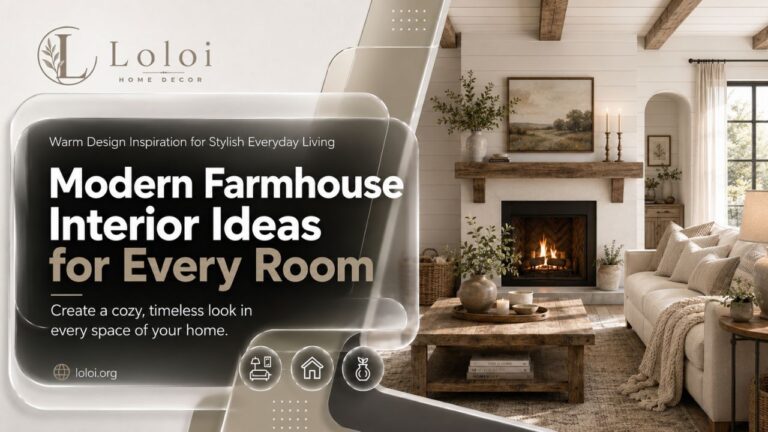
There’s a moment when you walk into a well-designed home and immediately feel like you could exhale. No fussiness, no visual noise — just warmth, purpose, and a sense of being grounded. That feeling, more often than not, belongs to the modern farmhouse interior. Over the past decade, this style has moved far beyond Pinterest boards and HGTV marathons. It’s become one of the most searched and most lived-in design aesthetics in America, and for good reason.
The modern farmhouse interior doesn’t ask you to choose between beauty and function. It grew out of the practical bones of traditional farmhouse architecture — exposed beams, wide-plank floors, utilitarian layouts — and married them with cleaner lines, updated materials, and a restrained color palette. The result is a home that feels both nostalgic and entirely current.
If you’ve been staring at your living room wondering why it feels chaotic despite your best efforts, or you’ve just moved into a new space and want a cohesive direction, this guide will walk you through every dimension of achieving this look. We’ll cover materials, color, room-by-room execution, and the small decisions that separate a truly pulled-together farmhouse home from one that just has a shiplap accent wall.
What Defines a Modern Farmhouse Interior
At its core, the modern farmhouse interior is a study in contrast — rough meets refined, old meets new. You’ll find reclaimed wood paired with matte black hardware. Linen curtains hanging beside a sleek concrete countertop. Vintage ironwork next to a clean-lined sofa in oatmeal-colored upholstery.
Design experts often describe this aesthetic as “edited rusticity.” Unlike traditional country or cottage styles, which can veer into cluttered or overly ornate territory, the modern farmhouse pares things down. Every element earns its place. There’s intentionality behind the worn leather bench, the galvanized metal pendant light, the stack of antique books on the console table.
Joanna Gaines, who helped popularize this style through the show Fixer Upper, once described it as “creating a home that has lived-in character while still feeling fresh.” That balance is the essence of it. And while her name is synonymous with the movement, the principles she follows are rooted in real design theory — contrast, texture, scale, and restraint.
The Color Palette: Staying Grounded Without Going Boring
Walk through any well-executed modern farmhouse interior and you’ll notice the colors never compete. The palette is almost always anchored by whites, off-whites, warm grays, and creamy neutrals. Benjamin Moore’s “White Dove” and Sherwin-Williams’ “Alabaster” are practically the unofficial official colors of this movement.
But restraint doesn’t mean monotony. The depth comes from layering textures within that neutral framework. A white shiplap wall reads very differently against raw oak floors than it does against painted pine. The same cream linen sofa shifts in character depending on whether you pair it with a jute rug or a weathered Persian.
Working with Warm and Cool Tones
One common mistake people make when trying to achieve a modern farmhouse interior is mixing warm and cool whites without realizing it. A warm ivory wall next to a cool stark-white trim creates a subtle tension that makes rooms feel “off” in a way you can’t quite put your finger on.
Stick to one temperature family and build from there. If you’re going warm — which most farmhouse spaces do — pull in tones like sage green, dusty blue, and terracotta as accent colors. These earthy hues feel at home without overwhelming the neutral base. Deep navy is another strong accent choice; it reads as sophisticated without abandoning the casual quality that makes farmhouse spaces so livable.
Materials and Textures That Do the Heavy Lifting
The visual richness of a modern farmhouse interior comes almost entirely from materials. This is where your budget decisions matter most — because a few well-chosen natural materials will always outperform a room full of synthetic imitations.
Wood is the obvious starting point. Wide-plank hardwoods in oak, hickory, or pine are the traditional choice for floors, and they hold up beautifully for decades. If real hardwood isn’t in the budget, high-quality LVP (luxury vinyl plank) in a wide-plank format has come a long way and works in high-moisture areas like kitchens and bathrooms where real wood struggles.
Shiplap and board-and-batten remain the two most recognizable wall treatments in this style. Shiplap — those horizontal boards with a slight reveal between them — adds linear texture without overwhelming a space. Board-and-batten, where vertical boards are applied in a paneled grid, tends to read a bit more formal and works especially well in dining rooms and entryways.
Metal Finishes: Matte Black vs. Unlacquered Brass
Hardware choices can make or break a modern farmhouse interior. Matte black has dominated the farmhouse space for several years — it’s graphic, gender-neutral, and works in virtually every room. But there’s been a meaningful shift toward unlacquered brass and aged bronze, both of which bring warmth and a sense of patina that feels authentically lived-in.
Mixing metals is acceptable — even encouraged — as long as you’re intentional about it. A good rule of thumb: choose one dominant finish (say, matte black for plumbing fixtures and cabinet pulls) and one secondary finish (aged brass for lighting and smaller accents). Avoid three or more distinct metals in a single space.
[IMAGE: Infographic showing modern farmhouse interior material combinations — wood tones, metal finishes, and fabric textures that work together]
Room-by-Room: Designing a Modern Farmhouse Interior That Feels Cohesive
Cohesion is what separates a modern farmhouse interior that photographs beautifully from one that actually feels intentional in person. The goal isn’t to make every room identical — it’s to create a visual thread that ties the home together as you move through it.
Living Room
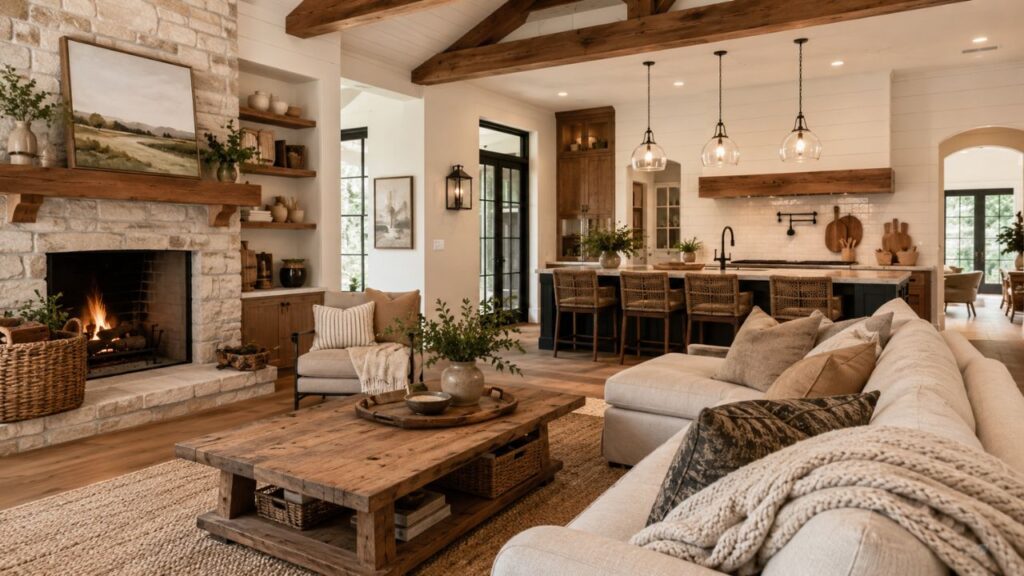
The living room is where the farmhouse style has the most flexibility. Start with a neutral sofa in a durable fabric — performance linen, cotton twill, or a tightly woven textured weave. Avoid anything that reads too modern (chrome legs, low-profile silhouettes) or too traditional (rolled arms, skirts). Look for something in between: track arms, turned wood legs, a mid-height profile.
Layer in a large jute or sisal rug to ground the seating area. Add throw pillows in a mix of patterns — buffalo check, solid linen, maybe a subtle floral in muted tones. The fireplace surround, if you have one, is a natural anchor for shiplap or a painted brick treatment. Built-in shelving flanking the fireplace adds both function and that “collected over time” quality.
Kitchen
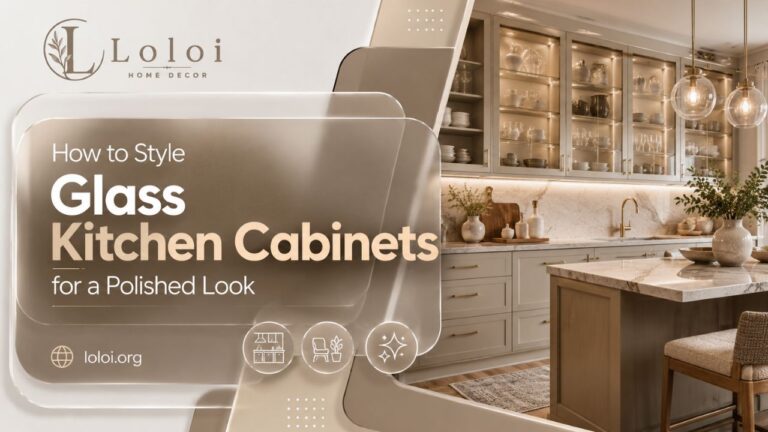
The farmhouse kitchen is arguably the heart of this whole design movement. Shaker-style cabinet doors in white or a soft greige are the most versatile choice. Pair them with open shelving for a section or two — open shelves add airiness and give you a place to display meaningful pieces like inherited pottery, vintage canisters, or a collection of cast iron cookware.
Countertops in white quartz or honed Carrara marble bring lightness to the space. For something warmer and more textural, butcher block on the island is a classic farmhouse choice that also adds practicality. Apron-front (farmhouse) sinks are nearly synonymous with the style — they’re functional, beautiful, and immediately communicative of the aesthetic.
Bedroom
Bedrooms in a modern farmhouse interior tend to be calm, layered, and slightly spare. A wooden headboard — whether shiplap-paneled, reclaimed barn wood, or a simple slatted design — anchors the space. Bedding in white or soft linen with textural interest (waffle weave, washed cotton, quilted details) keeps the palette clean.
Natural light is your best friend here. Keep window treatments simple: white linen or cotton drapes hung high and wide to maximize the impression of height and openness. A vintage-inspired or rattan pendant light over each bedside table replaces the traditional lamp and adds character without taking up surface space.
Barn Doors, Exposed Beams, and the Details That Make It
The architectural details in a modern farmhouse interior aren’t just decorative — they’re structural statements. Barn doors, in particular, have become a signature element. They’re practical in tight spaces where a swinging door would eat into the room, and they carry an immediate visual identity.
Sliding barn doors work especially well for closets, laundry rooms, bathroom entrances, and home office areas. Choose hardware in matte black or an oil-rubbed bronze finish. The door itself can be solid wood, a Z-brace design, or even a glass-paned version if you want to borrow light between rooms.
Exposed ceiling beams — whether structural or decorative — add incredible depth and the sense that a space has actual history. Real reclaimed beams are the most authentic option, but manufactured faux beams have improved dramatically in recent years and can be nearly indistinguishable at a glance. The key is proportion: beams should be scaled appropriately for the ceiling height and room size.
Blending Old and New Without Going Overboard
One of the trickier aspects of modern farmhouse interior design is knowing when to stop. Because the aesthetic celebrates imperfection and age, it’s tempting to keep adding vintage pieces, more shiplap, more texture — until the room tips from charming into chaotic.
A useful mental exercise is the “one per room” rule for statement pieces. One vintage item that really shows its age — a weathered farm table, an antique mirror with patchy silver, a chippy-painted side table. Let that piece do the talking. Everything else should be quieter.
Similarly, modern elements prevent the space from becoming a period-piece caricature. A contemporary art print in a thin matte frame, a streamlined pendant with an industrial edge, a clean-lined sectional in a warm fabric — these keep the modern farmhouse interior feeling like a home for right now, not a museum exhibit.
Frequently Asked Questions
What is the difference between farmhouse and modern farmhouse interior design?
Traditional farmhouse design leans heavily into country elements — roosters, dried flowers, heavily distressed furniture, and fussier patterns like cabbage roses. The modern farmhouse interior strips those elements back and replaces them with cleaner lines, a more restrained palette, and materials that feel contemporary even when they’re rooted in tradition. The result feels casual and warm, but not dated.
Is shiplap necessary for a modern farmhouse interior?
Not at all. Shiplap is one of the most recognized elements of the style, but it’s not a requirement. Board-and-batten, exposed brick, painted wood paneling, or even a well-placed textured wallpaper can achieve the same sense of warmth and character. Focus on texture rather than a specific material.
What flooring works best in a modern farmhouse interior?
Wide-plank hardwood in white oak, hickory, or pine is the traditional choice. Lighter, natural tones tend to work better than very dark stains, which can feel too formal. If you need a more budget-friendly or water-resistant option, quality LVP in a wide-plank format is a strong alternative.
Can you mix modern farmhouse style with other aesthetics?
Absolutely. The modern farmhouse interior blends naturally with Scandinavian minimalism (which shares the love of natural materials and neutral palettes), industrial design (through metal finishes and open shelving), and even a touch of coastal style. The key is keeping the palette and textures cohesive even as individual elements vary.
How do I keep a modern farmhouse interior from looking too generic?
The best way to avoid the “catalog farmhouse” look is to incorporate pieces that are genuinely yours — inherited furniture, artwork from local makers, vintage finds that have actual history. Personalization is what elevates the aesthetic from a formula into a home. Avoid buying everything from a single store or collection.
What lighting works best in a farmhouse-style home?
Pendants with cage, enamel, or lantern-style shades are classic choices. Rattan and wicker pendants add organic warmth in bedrooms and dining spaces. For overhead lighting in larger rooms, wagon-wheel or linear chandeliers with Edison bulbs reinforce the aesthetic without being heavy-handed. Dimmer switches are essential — adjustable light dramatically changes the mood of any farmhouse space.
Is modern farmhouse interior design still popular in 2025?
Yes, though it’s evolved. The more maximalist version — shiplap on every surface, galvanized everything, all-white palette — has softened into something more personal and layered. Warm earthy tones, curved silhouettes mixed in with the traditional straight lines, and more global influences have updated the look for current tastes without abandoning its core identity.
Final Thoughts
What makes the modern farmhouse interior endure, when so many design trends burn bright and fade fast, is that it’s built on something real. It’s not about a specific product or a single look — it’s about a feeling. Warmth, honesty, and the kind of comfortable livability that makes a house feel like someone actually lives in it.
Getting it right takes patience. You won’t find the perfect vintage bench on your first antique store visit. The right shade of white might take three sample pots before it clicks. That’s part of the process, and it’s worth it.
Whether you’re redesigning a room at a time or taking on a full renovation, the principles here give you a framework that scales. Start with your materials, anchor your palette, layer in texture, and edit ruthlessly. The modern farmhouse interior rewards that discipline — and the result, when it comes together, is a home that feels like it’s always been exactly as it is.