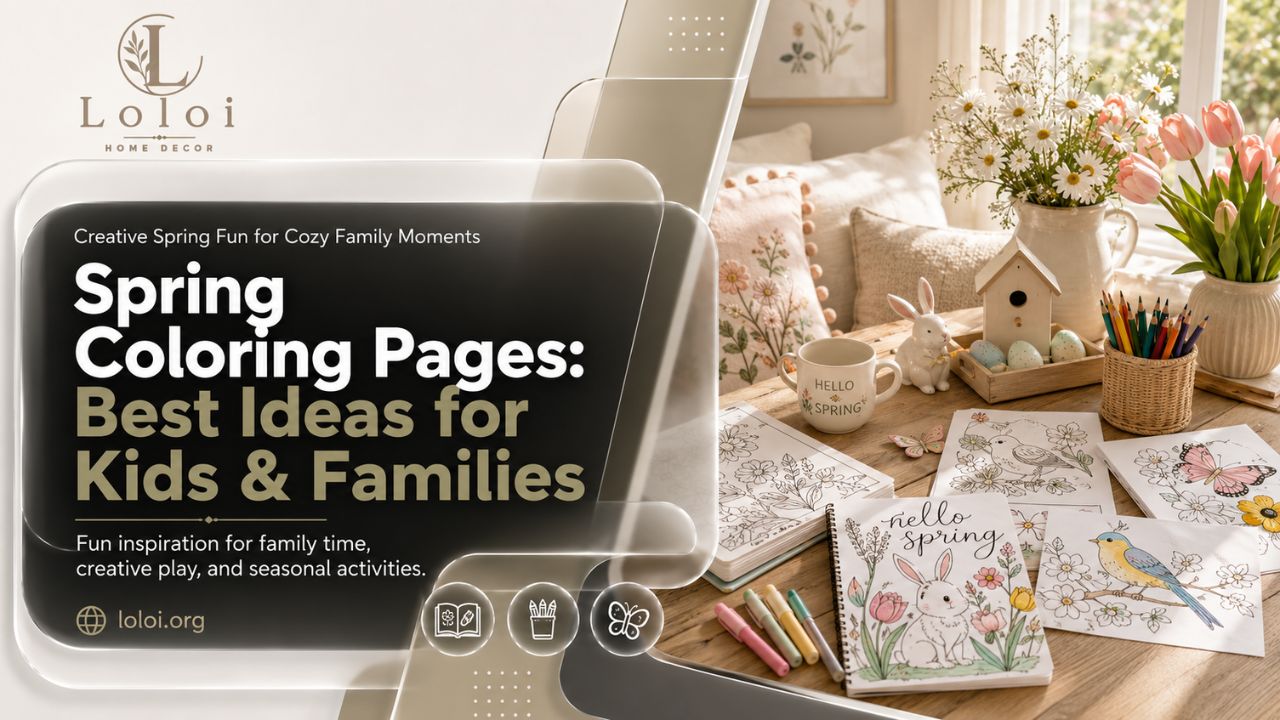
There’s something almost magical about watching a child pick up a crayon and bring a blank page to life. Spring coloring pages have been a staple of childhood creativity for generations — and if you’ve ever sat beside a four-year-old carefully coloring a tulip yellow instead of red, you know the quiet joy they bring to a room. Research from the American Art Therapy Association suggests that creative coloring activities support fine motor development, emotional regulation, and early literacy skills in children aged 2–8.
The appeal isn’t limited to spring, of course. Families reach for coloring pages year-round, from the first robin sightings in March all the way through snowflakes and Santa in December. This guide covers the full seasonal spectrum — spring coloring pages, winter coloring pages, holiday crafts, Christmas activities, and everything in between — so you always have something ready when kids need a creative outlet.
Whether you’re a parent, a preschool teacher, a grandparent hosting over the holidays, or someone who just genuinely loves a good craft session, this is your complete resource. You’ll find ideas that work across ages, seasons, and skill levels — no art degree required.
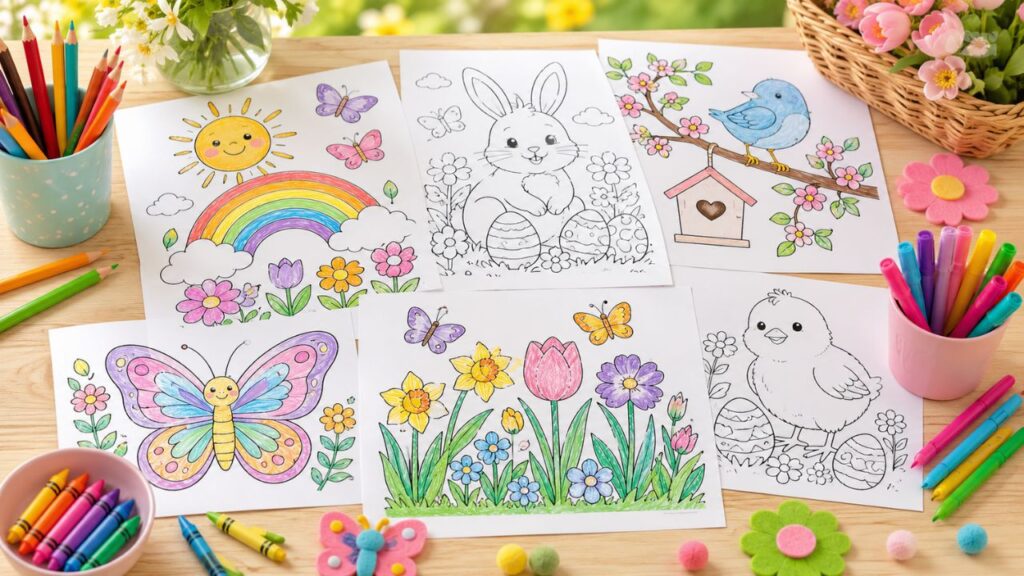
Why Spring Coloring Pages Are the Perfect Seasonal Activity
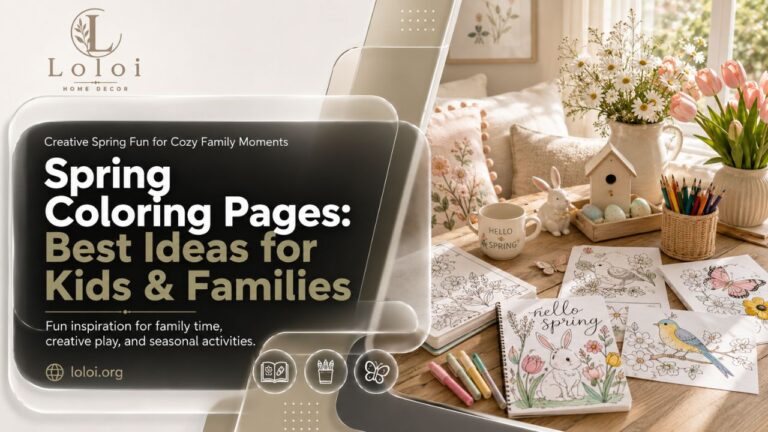
Spring is arguably the richest season for coloring themes. The visual world practically explodes with material: blooming flowers, baby animals, butterflies, rainbows, Easter eggs, garden scenes, and bright blue skies after months of gray. Spring coloring pages tap into that energy in a way that engages kids almost instinctively.
There’s also a developmental angle worth understanding. Occupational therapists frequently recommend coloring as a pre-writing activity because it strengthens the pincer grip children need for holding pencils. Spring themes — with their varied shapes, from the delicate petals of a daisy to the angular wings of a butterfly — provide natural complexity that scales with a child’s growing ability.
What Makes a Great Spring Coloring Page
Not all coloring pages are created equal. The best spring coloring pages share a few characteristics that make them genuinely engaging rather than frustrating:
- Age-appropriate line weight — younger children (2–4) need thick, bold outlines; older kids (6+) can handle finer details
- Recognizable imagery — flowers, bees, chicks, butterflies, and rain boots are universally understood
- White space variety — a mix of large open areas and smaller detailed sections keeps kids interested longer
- Seasonal accuracy — images that actually look like spring (not generic nature scenes) reinforce learning
When you print spring coloring pages at home, cardstock paper makes a noticeable difference in the finished product. Markers bleed less, crayons glide more smoothly, and the pages hold up better when kids want to display their work.
From Spring to Winter: Coloring Pages Across Every Season
Once families discover how versatile coloring pages are in spring, they naturally look for the same activity in other seasons. Winter coloring pages fill a genuine need during the colder months when outdoor play is limited and kids need structured indoor activities that don’t require a screen.
Free winter coloring pages are widely available through educational websites like Teachers Pay Teachers, Super Coloring, and Crayola’s own resource library. The imagery shifts beautifully from spring’s warmth to winter’s wonder — snowflakes, polar bears, mittens, hot cocoa mugs, and of course holiday characters. Free winter coloring pages work especially well for classroom use because teachers can print in bulk without budget concerns.
Winter Coloring Pages vs. Spring Coloring Pages: What’s Different
The structural differences between seasonal coloring pages are more interesting than you’d expect. Winter coloring pages tend to feature more geometric shapes — snowflakes, stars, wrapped presents — which can actually be more challenging for young hands than spring’s organic curves. Spring coloring pages favor rounded, flowing lines that feel more natural and forgiving for beginners.
From a color theory standpoint, winter scenes invite a broader palette experimentation: deep blues, icy whites, gold, silver, and rich reds. Spring coloring pages, by contrast, lean on bright primaries and pastels. Offering both through the year gives children an informal education in color relationships without anyone framing it as a lesson.
Holiday Crafts: Taking Seasonal Creativity Beyond the Page
Coloring pages are a gateway. Once children get comfortable with them, holiday crafts become the natural next step — and the range of what qualifies as a holiday craft is genuinely wide. Holiday crafts for kids can be as simple as gluing cotton balls onto a paper snowman or as involved as building a gingerbread house from scratch.
The best holiday crafts share one quality: they’re process-focused rather than product-focused. When you sit down with a child for holiday crafts, the goal isn’t a Pinterest-perfect finished item. It’s the 45 minutes of focused attention, creative problem-solving, and shared conversation that happen along the way. Research in developmental psychology consistently links hands-on creative activities to stronger parent-child attachment — especially when the adult participates rather than just supervises.
Holiday Crafts for Kids by Age Group
Matching the craft to the child’s developmental stage makes a real difference in how the experience goes. Here’s a practical breakdown:
Ages 2–3 (Toddlers): Holiday crafts at this age should involve tearing, stamping, and large-scale gluing. Handprint ornaments, footprint reindeer, and simple paper chain garlands work beautifully because they require minimal fine motor precision.
Ages 4–6 (Preschool and Kindergarten): This is the sweet spot for most holiday crafts for kids. Children this age can use safety scissors, apply glue sticks with some control, and follow simple two-step instructions. Paper bag puppets, felt ornaments, and seasonal greeting cards all land well.
Ages 7–10 (Early Elementary): Older kids can handle more complex holiday crafts with multiple steps: homemade snow globes, beeswax candles, fabric gift wrap, and beaded ornament projects. They also love being given creative autonomy — set out the materials and let them lead.
Christmas Crafts for Kids: A Season of Endless Creativity
Christmas is the undisputed peak season for kids’ crafting, and christmas crafts for kids have an almost nostalgic quality for many families. These activities connect generations — the paper chain technique your mother taught you in 1989 works just as well for your own children today.
Christmas crafts don’t require expensive materials or advanced skills. Some of the most beloved christmas craft ideas use things you likely already have at home: toilet paper rolls, old buttons, dried pasta, construction paper, and leftover wrapping paper. The humble materials are part of the charm.
Easy Christmas Crafts for Kids That Actually Work
The internet is full of gorgeous christmas craft ideas that look achievable in the tutorial photo and end up as frustrated children and glitter on the ceiling. These easy christmas crafts have been tested in real homes and real classrooms:
- Salt Dough Ornaments — Mix 1 cup flour, ½ cup salt, ½ cup water. Roll, cut into shapes, bake at 200°F for 3 hours. Paint when cool. This one genuinely delivers every time.
- Paper Plate Wreaths — Cut the center out of a paper plate, paint the ring green, add red button “berries.” Preschool-simple, but the result looks great hung on a door.
- Pinecone Bird Feeders — Roll a pinecone in peanut butter, coat in birdseed, hang outside. Technically a Christmas craft and a nature activity.
- Felt Christmas Stockings — Pre-cut stocking shapes from felt, hole-punch the edges, and let kids lace them together with yarn. No sewing machine needed.
- Newspaper Christmas Trees — Roll sheets of newspaper into a cone shape, spray paint green, add small ornament dots with paint. Surprisingly elegant for zero cost.
Easy christmas crafts succeed when they match the child’s attention span. Most children under six can sustain focused craft attention for about 20–30 minutes. Design accordingly.
Kids Christmas Crafts for the Classroom
Teachers face a specific set of constraints: limited budget, large groups, varying skill levels, and the need for activities that are both engaging and manageable. The best kids christmas crafts for classrooms are ones where the process is forgiving — meaning it’s hard to “ruin” them.
Fingerprint Christmas tree cards (where each fingerprint becomes a light bulb), paper snowflake cutting, and group paper chain projects all work well in classroom settings. They’re scalable, cheap, and produce results that kids are genuinely proud of.
Preschool Christmas Crafts: Special Considerations for Little Hands
Preschool christmas crafts occupy their own category because preschool-age children (roughly 3–5) are still developing the manual dexterity and attention span that older crafters take for granted. The goal isn’t a polished finished product — it’s an experience that feels successful to the child.
Christmas crafts preschool teachers rely on share a few design principles: large pieces that are easy to handle, non-toxic and washable materials, and clear visual models. When a preschooler can look at a sample and immediately understand what they’re making, their confidence goes up and meltdowns go down.
Best Christmas Crafts Preschool Teachers Recommend
- Tissue paper Christmas trees — Tear colored tissue paper into small pieces, crumple, and glue onto a triangle cutout. No scissors needed.
- Pasta ornaments — Glue dried pasta onto cardboard cutouts, let dry, spray gold or silver. Children love the texture.
- Sponge-painted stockings — Cut a stocking shape from heavy paper, dip a sponge in red paint, and press repeatedly. Very achievable even for the youngest crafters.
- Cotton ball snowmen — Glue cotton balls onto pre-drawn snowman outlines, add button and scarf details with stickers.
These preschool christmas crafts are also excellent for parents who want low-stress holiday activities at home. The materials are inexpensive, the cleanup is manageable, and the finished pieces make genuinely sweet holiday decorations.
Singing and Storytelling: Adding Sound to Seasonal Crafts
Crafting doesn’t have to happen in silence. Many families and teachers pair coloring pages and christmas craft sessions with seasonal songs and stories — and this combination is more developmentally powerful than it might seem. Music activates multiple brain regions simultaneously and helps children absorb vocabulary and concepts more efficiently.
The santa claus song lyrics are among the most recognized in American culture, and singing “Santa Claus Is Coming to Town” while making holiday crafts creates the kind of multi-sensory memory that sticks. Research on early childhood education consistently shows that learning experiences involving movement, song, and hands-on activity are retained longer than passive instruction.
5 little turkeys is another perennial favorite — particularly in November and for Thanksgiving-themed craft sessions. The counting song integrates math concepts naturally while children color turkey coloring pages or make handprint turkey crafts. Pairing counting songs with crafts builds number sense in a way that feels like play.
Finding and Printing Free Spring and Winter Coloring Pages
The practical question everyone eventually asks: where do you actually find good printable pages? The quality varies enormously, and knowing which sources to trust saves a lot of printer ink and disappointment.
Top sources for spring coloring pages and free winter coloring pages:
- Crayola.com — The brand’s website offers free, high-quality coloring pages across all seasons, organized by age and theme
- Super Coloring — A large library with genuinely detailed options for older children and adults
- Teachers Pay Teachers — Excellent for classroom-ready sets, many free; quality is generally high because educators have vetted them
- Pinterest — Good for discovery, but always click through to the original source before printing
- Activity Village — A UK-based site with a surprisingly strong collection of seasonal coloring pages and craft printables
When printing at home, choose the “fit to page” setting and turn off headers and footers in your print dialog. This gives you the cleanest possible image without web addresses cluttering the bottom of the page.
Frequently Asked Questions
What age are spring coloring pages appropriate for?
Spring coloring pages work for children as young as 18 months with simple, bold designs, all the way through elementary school for more detailed versions. Even adults find therapeutic value in detailed coloring pages. The key is matching the complexity of the page to the child’s current fine motor ability.
Where can I find free winter coloring pages to print?
Free winter coloring pages are available on Crayola.com, Super Coloring, Activity Village, and Teachers Pay Teachers. Most of these sites organize pages by age group and theme, making it easy to find something appropriate for your specific child or classroom.
What are the easiest Christmas crafts for toddlers?
The easiest christmas crafts for toddlers involve stamping, tearing, and large-scale gluing — handprint ornaments, cotton ball snowmen, and sponge-painted stockings are reliable choices. These activities require minimal fine motor precision and produce results children are genuinely proud of.
How do I keep preschoolers engaged during holiday crafts?
Keep the activity to 20–25 minutes maximum, have all materials pre-prepared before you sit down together, and have a simple visual example to show. The best holiday crafts for kids this age are ones where the child can see success quickly — instant gratification matters enormously at preschool age.
What supplies do I need for kids Christmas crafts at home?
Most kids christmas crafts require only basic supplies: construction paper, safety scissors, washable glue, crayons or markers, and simple embellishments like stickers, buttons, or cotton balls. A few specialty items like felt sheets or salt dough ingredients open up more options without significant cost.
Are coloring pages actually educational?
Yes — research consistently supports the educational value of coloring activities. They develop fine motor skills, hand-eye coordination, color recognition, and even early literacy through exposure to letter and word-illustrated designs. Spring coloring pages specifically reinforce seasonal vocabulary and nature awareness.
What’s the difference between holiday crafts and Christmas crafts?
Holiday crafts is a broader term covering any seasonal or celebratory craft activity, including Hanukkah, Kwanzaa, Thanksgiving, and New Year’s projects. Christmas crafts specifically reference Christmas-themed activities. Both categories overlap significantly in terms of skills, materials, and the age groups they serve.
Can I use spring coloring pages for classroom activities?
Absolutely — spring coloring pages are a classroom staple, particularly in preschool and kindergarten settings. They work well as morning arrival activities, fine motor practice stations, and seasonal bulletin board displays. Printing on cardstock and using them as part of a larger spring theme unit adds educational structure.
Wrapping Up the Season
Seasonal creativity — whether through spring coloring pages in April or preschool christmas crafts in December — is one of the simplest and most enduring ways to connect with children. These activities don’t require special talent, expensive materials, or elaborate planning. They ask only for time, presence, and a willingness to let children make something that’s entirely their own.
What stays with children isn’t the finished ornament or the perfectly colored butterfly — it’s the memory of sitting beside someone who thought it was worth doing together. Spring coloring pages, christmas craft ideas, counting songs, and holiday crafts of every variety are really just vehicles for that connection.
So pull out the crayons, download a few free winter coloring pages, queue up the santa claus song lyrics, and let the season do its thing. The glitter will wash out. The memory won’t.