
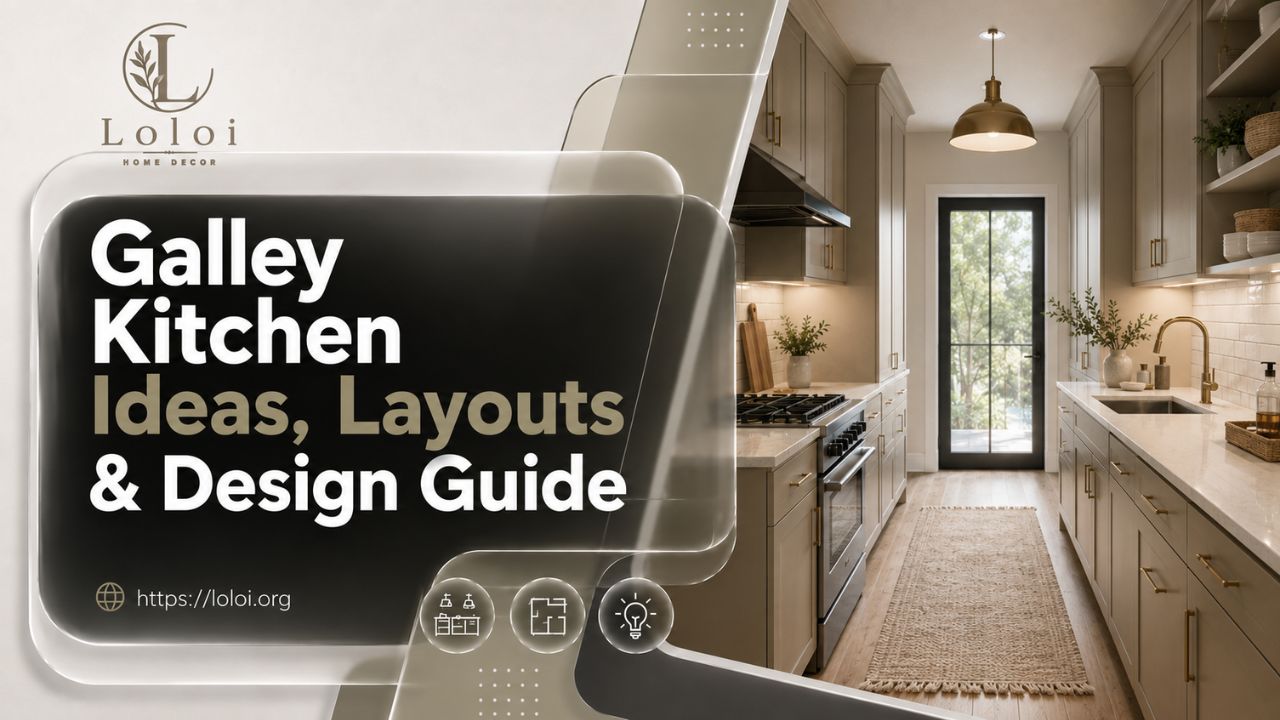
Some of the most efficient kitchens ever built measure less than 8 feet wide. Navy ships, commercial airline galleys, and Michelin-starred restaurant prep kitchens all share one design principle: everything within arm’s reach, nothing wasted. That same principle is exactly what makes a galley kitchen one of the smartest layouts available to homeowners — and one of the most consistently underestimated.
If you’ve been told your narrow kitchen is a liability, you’ve been getting bad advice. The galley layout has a longer track record of functional excellence than almost any other kitchen configuration. The problem isn’t the layout itself. The problem is that most people don’t know how to work with it — and the design industry has spent decades convincing homeowners that bigger and more open is always better.
It isn’t. Not always. And for a growing number of homeowners renovating apartments, townhouses, and older homes with defined room boundaries, the galley kitchen isn’t a compromise. It’s a deliberate, intelligent choice. What follows is everything you need to understand it, plan it, and execute it well.
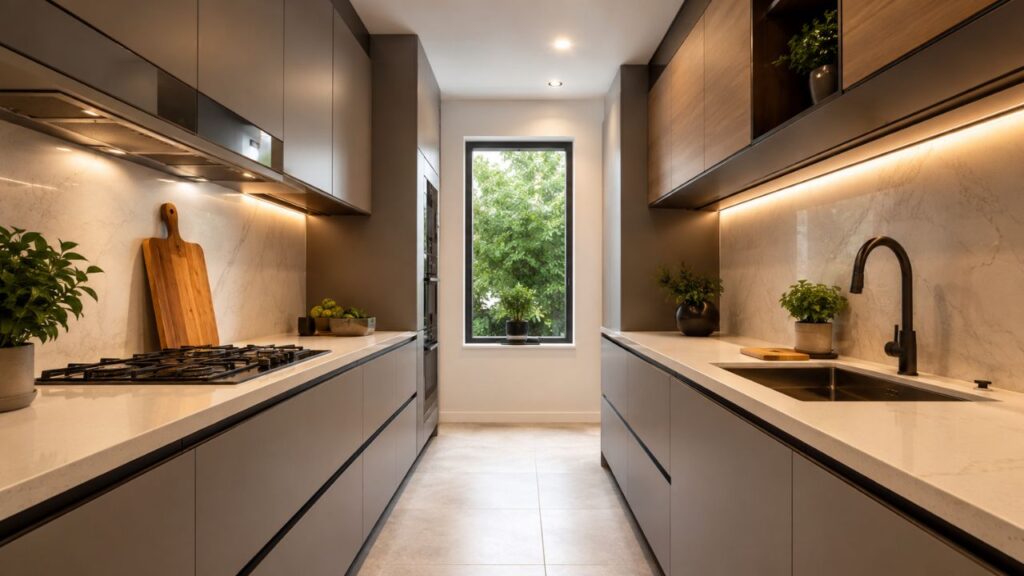
What Is a Galley Kitchen — And Why Does It Work So Well?
The term “galley” comes directly from ship design. A ship’s galley — the onboard kitchen — had to function efficiently in an extremely confined space, with everything a cook needed accessible without unnecessary movement. Two parallel walls of storage and workspace, a clear corridor between them, and a workflow that moved in one direction. Simple. Logical. Effective.
What is a galley kitchen in a residential context? It’s a kitchen layout built along two parallel walls, creating a corridor-style workspace. The cook stands in the middle, with countertops, cabinets, and appliances on both sides. Some galley kitchens are closed at both ends; others open at one or both ends into adjacent living or dining spaces.
The reason this layout works so well comes down to a concept kitchen designers call the work triangle — the relationship between the sink, stove, and refrigerator. In a galley layout, these three points naturally fall into a tight, efficient triangle that minimizes unnecessary steps. According to the National Kitchen and Bath Association, the ideal work triangle has a total perimeter of no more than 26 feet. In a well-planned galley kitchen, that number often comes in well under 20.
The Galley vs. Other Kitchen Layouts
Compare the galley to an L-shaped or U-shaped kitchen, and the efficiency advantage becomes clear. L-shaped kitchens work well in open-plan spaces but often create dead corner storage and longer distances between work zones. U-shaped kitchens offer more counter space but require a larger footprint and can feel enclosed in smaller homes.
The galley layout eliminates corner cabinet problems entirely, keeps all work surfaces within a few steps of each other, and scales down gracefully into smaller square footage. For kitchens under 150 square feet — which describes a significant portion of American apartments and older homes — the galley is often the most functional layout available.
Understanding Galley Kitchen Floor Plans Before You Plan Anything
The single most common mistake homeowners make when approaching a galley kitchen remodel is jumping straight to aesthetics — cabinet styles, countertop materials, paint colors — before establishing a solid floor plan. The floor plan is the foundation. Everything else is built on top of it.
Galley kitchen floor plans come in several variations, each suited to different space dimensions and household needs.
The Classic Two-Wall Galley
The most traditional configuration places all cabinetry, appliances, and countertops along two parallel walls with a corridor between them. The minimum functional corridor width is 42 inches for a single-cook household; 48 inches is recommended when two people regularly cook together. Anything narrower than 42 inches creates genuine functional problems — appliance doors can’t open fully, and two people can’t pass each other comfortably.
This layout works best in dedicated kitchen spaces — rooms with defined walls on both sides — and in apartments where the kitchen is a separate room rather than part of an open floor plan.
The Single-Wall Galley
Some spaces labeled as galley kitchens actually use only one wall, with the opposite wall left open or used for a dining area. This is technically a single-wall layout rather than a true galley, but the design principles overlap significantly. Counter space is more limited, and the work triangle becomes a work line — which reduces efficiency but opens the space visually.
Open-Ended vs. Closed Galley Floor Plans
A closed galley kitchen has walls at both ends, creating a fully enclosed corridor. This maximizes storage and counter space but can feel tight, particularly in shorter kitchens. An open-ended galley — open at one or both ends — connects to adjacent living or dining spaces, improving the sense of openness and allowing natural light to travel through the space.
For most residential renovations, the open-ended galley floor plan offers the best balance of function and livability. Removing a non-load-bearing wall at one end of a galley kitchen is one of the most impactful and cost-effective structural changes you can make in a kitchen remodel.
Galley Kitchen Layout: The Decisions That Determine Everything
Once you’ve established your floor plan, the layout decisions within that plan determine how well the kitchen actually functions. These aren’t aesthetic choices — they’re functional ones that affect every meal you cook for the next 15 years.
Appliance Placement in a Galley Layout
The galley kitchen layout rewards deliberate appliance placement more than almost any other configuration. The general principle: place the refrigerator at or near one end of the galley, the sink in the middle zone, and the stove or cooktop toward the other end. This creates a natural workflow — you move from storage (refrigerator) to prep (sink area) to cooking (stove) in a logical sequence without backtracking.
Avoid placing the refrigerator in the middle of a run of cabinets. The refrigerator door swing — typically 36 inches or more — creates a significant obstruction in a narrow corridor when the door is open. Positioning it at the end of the run eliminates this problem entirely.
The Corridor Width Question
Corridor width is the most consequential dimension in any galley kitchen layout. The difference between 42 inches and 48 inches sounds minor. In practice, it’s the difference between a kitchen that feels workable and one that feels genuinely comfortable.
If you’re renovating and have any flexibility in the wall positions, prioritize corridor width over counter depth. A slightly shallower counter (22 inches instead of 24) that gives you an extra 2 inches of corridor width is almost always the better trade-off.
Upper Cabinet Height and Depth
Standard upper cabinets are 12 inches deep. In a galley kitchen, this depth matters more than in wider kitchens because upper cabinets on both sides of the corridor can feel visually heavy and physically enclosing. Consider extending upper cabinets to the ceiling — which eliminates the dust-collecting gap above standard-height uppers and maximizes storage — while keeping the cabinet depth at 12 inches rather than going deeper.
Glass-front upper cabinet doors on one side of the galley create visual depth and make the corridor feel wider than it is. This is one of the most effective perceptual tricks in galley kitchen design, and it costs no more than solid doors.
Galley Kitchen Ideas That Actually Work in Real Homes
The best galley kitchen ideas don’t come from design magazines featuring 500-square-foot kitchens with professional photography. They come from understanding how real people use real kitchens and applying design principles that solve actual problems.
Light as a Design Tool
Galley kitchens — particularly closed ones — can feel dark and tunnel-like without deliberate attention to lighting. The solution isn’t just adding more light fixtures. It’s layering light sources strategically.
Under-cabinet lighting eliminates the shadow that upper cabinets cast on countertops, making prep work significantly easier and the space feel more open. Pendant lights over a peninsula or at the open end of a galley add warmth and visual interest. Recessed lighting in the ceiling provides ambient illumination without consuming visual space the way a large chandelier would.
If your galley kitchen has a window at one end, treat it as the anchor of the design. Keep the area around it clear of tall cabinets or appliances that would block the light from traveling down the corridor.
Reflective Surfaces and Visual Expansion
In a narrow space, surfaces that reflect light make the kitchen feel larger without changing a single dimension. Glossy cabinet finishes, mirrored or glass backsplash tiles, polished stone countertops, and stainless steel appliances all contribute to this effect.
The most impactful single change in many galley kitchen ideas is replacing a solid backsplash with a light-colored, slightly reflective tile. Subway tile in a bright white or soft gray, laid in a classic brick pattern or a more contemporary vertical stack, bounces light around the corridor and creates a sense of depth that flat painted walls simply don’t provide.
The Peninsula Addition
If your galley kitchen opens at one end into a dining or living area, adding a peninsula — a counter extension that projects perpendicular to one of the galley walls — transforms the layout in two meaningful ways. It adds counter and storage space, and it creates a natural boundary between the kitchen and the adjacent room without closing the space off entirely.
A peninsula with seating on the non-kitchen side also solves the galley kitchen’s most common social problem: the cook is isolated from guests or family in the adjacent room. With a peninsula, conversation flows naturally across the counter while the cook works.
Galley Kitchen Designs: Style Approaches That Complement the Layout
Galley kitchen designs succeed when the aesthetic choices reinforce the layout’s strengths rather than fighting against them. The galley’s natural efficiency and linearity lend themselves to certain design approaches more than others.
Contemporary and Minimalist
The galley layout is inherently minimalist — clean lines, parallel surfaces, no wasted space. Contemporary design amplifies these qualities. Flat-front cabinet doors in a matte or satin finish, integrated appliances that sit flush with the cabinet faces, and a monochromatic color palette create a galley kitchen that feels intentional and refined rather than cramped.
Handle-less cabinets — using push-to-open mechanisms or recessed finger pulls — are particularly effective in galley designs because they eliminate the protruding hardware that can feel obstructive in a narrow corridor.
Transitional and Farmhouse
Shaker-style cabinet doors work beautifully in galley kitchens because their simple profile doesn’t add visual weight to an already compact space. Paired with open shelving on one wall — replacing a run of upper cabinets with floating shelves — a shaker galley kitchen achieves a farmhouse warmth without feeling cluttered.
The key in transitional galley kitchen designs is restraint. Every decorative element needs to earn its place. A single statement light fixture at the open end of the galley, a distinctive backsplash tile, or a bold countertop material provides personality without overwhelming the space.
Two-Tone Color Approaches
Two-tone galley kitchen designs — lighter upper cabinets, darker lower cabinets — work particularly well in the galley format. The lighter uppers keep the upper portion of the corridor feeling open and airy, while the darker lowers ground the space and hide the inevitable scuffs and marks that base cabinets accumulate in a high-traffic corridor.
Navy lower cabinets with white uppers, sage green lowers with cream uppers, or charcoal lowers with light gray uppers are all combinations that have proven their staying power across multiple design cycles.
Planning a Galley Kitchen Remodel: What to Prioritize
A galley kitchen remodel follows the same general sequence as any kitchen renovation, but the compact nature of the layout amplifies both the impact of good decisions and the cost of poor ones. Getting the sequence right matters.
Start With the Floor Plan, Not the Finishes
Before you choose a cabinet style or countertop material, confirm your floor plan. Measure the corridor width, the total length of each wall run, the ceiling height, and the location of every window, door, plumbing connection, and electrical outlet. These fixed points constrain your options in ways that no amount of design inspiration can override.
If you’re working with a designer or contractor, provide these measurements before your first meeting. Professionals who ask for measurements before discussing design are the ones worth working with.
The Structural Question
Many galley kitchen remodels involve at least one structural consideration — typically the question of whether to open one end of the galley into an adjacent space. This requires determining whether the wall in question is load-bearing. A structural engineer or experienced contractor can assess this quickly, and the cost of the assessment is trivial compared to the cost of making the wrong assumption.
Opening a closed galley kitchen into a dining or living area is one of the highest-impact changes available in a remodel. It doesn’t add square footage, but it fundamentally changes how the kitchen feels and how it connects to the rest of the home.
Budget Allocation in a Galley Kitchen Remodel
The compact footprint of a galley kitchen remodel creates an interesting budget dynamic: the cost per square foot is typically higher than in larger kitchens, but the total project cost is often lower. This means you can allocate a higher percentage of your budget to quality materials and finishes without the total number becoming prohibitive.
In a galley remodel, prioritize spending on:
- Cabinet construction quality — plywood boxes, dovetail drawers, soft-close hardware
- Countertop material — the countertops in a galley are always visible and always in use
- Lighting — under-cabinet, recessed, and pendant lighting transform the space more than almost any other single investment
- Corridor width — if structural changes are possible, prioritizing corridor width over counter depth pays dividends daily
Where you can reasonably economize: backsplash tile (the area is small, so even premium tile is affordable), appliances (mid-range appliances perform comparably to premium ones for most households), and decorative accessories.
Frequently Asked Questions
What is the minimum size for a functional galley kitchen?
A functional galley kitchen needs a minimum corridor width of 42 inches and a total length of at least 8 feet to accommodate the essential work triangle. Below these dimensions, appliance doors can’t open fully and the workflow becomes genuinely compromised. Most residential galley kitchens run between 8 and 12 feet in length, with corridor widths between 42 and 60 inches — and that range covers a wide variety of homes comfortably.
Can a galley kitchen work for a family, or is it only suited to single-person households?
A galley kitchen works well for families when the corridor width reaches at least 48 inches, allowing two people to work simultaneously without constant collision. The key is thoughtful zone planning — assigning specific areas of the galley to specific tasks so that two cooks naturally occupy different sections rather than competing for the same counter space. Many professional restaurant kitchens use galley-style layouts precisely because they support multiple cooks working efficiently in parallel.
How do I make a galley kitchen feel less like a corridor?
The most effective approaches involve light and visual depth rather than structural changes. Under-cabinet lighting eliminates the shadow that makes galley kitchens feel dark and tunnel-like. Glass-front upper cabinets on one side create visual depth. A window or open end at one terminus of the galley draws the eye outward and makes the space feel connected to a larger environment. Keeping the upper portion of the walls lighter than the lower portion also raises the perceived ceiling height.
Is a galley kitchen remodel worth the investment for resale value?
A well-executed galley kitchen remodel consistently delivers strong returns, particularly in urban markets where apartment and townhouse buyers expect compact, efficient kitchens. According to Remodeling Magazine’s annual Cost vs. Value Report, mid-range kitchen remodels return approximately 70% to 80% of their cost at resale in most U.S. markets. A galley remodel that improves both function and appearance — particularly one that opens a closed galley to an adjacent space — often performs at the higher end of that range.
What appliances work best in a galley kitchen layout?
Counter-depth refrigerators are significantly better suited to galley kitchens than standard-depth models — they sit flush with the cabinet faces and don’t protrude into the corridor. Slide-in ranges eliminate the gap between the range and adjacent cabinets that freestanding models create. Drawer-style dishwashers are worth considering in very narrow galleys because they require less door clearance than standard dishwashers. For ventilation, a low-profile range hood or a downdraft system keeps the visual weight above the cooktop minimal.
How do I add storage to a galley kitchen without making it feel more cramped?
The most effective storage additions in a galley kitchen are vertical rather than horizontal. Extending upper cabinets to the ceiling adds significant storage without consuming any floor space or corridor width. Pull-out pantry cabinets — tall, narrow units that slide out to reveal multiple shelves — provide substantial dry goods storage in a footprint of 6 to 9 inches. Inside existing base cabinets, pull-out shelf systems and drawer organizers dramatically improve the usability of existing storage without adding any visual bulk to the space.
What flooring works best in a galley kitchen?
Large-format tiles — 12×24 inches or larger — laid lengthwise along the galley corridor create a visual line that makes the space feel longer and more expansive. Light-colored hardwood or wood-look luxury vinyl plank flooring achieves a similar effect with added warmth. Avoid small mosaic tiles or busy patterns in a galley kitchen — they fragment the visual field and make the corridor feel shorter and narrower than it is. Whatever material you choose, ensure it’s rated for kitchen use and handles moisture and heavy foot traffic reliably.
Can I add an island to a galley kitchen?
A traditional island — a freestanding unit in the center of the kitchen — isn’t compatible with a galley layout because it would block the corridor entirely. However, a rolling kitchen cart can serve many of the same functions (additional prep surface, storage, mobility) without permanently occupying corridor space. If your galley opens at one end, a peninsula attached to one of the galley walls is a far better solution than an island — it adds counter space and storage while maintaining the corridor’s functionality.
Making the Most of What You Have
The galley kitchen has outlasted every kitchen trend of the past century for a simple reason: it works. Not in spite of its constraints, but because of them. The narrow corridor, the parallel walls, the linear workflow — these aren’t design limitations to apologize for. They’re the features that make the layout efficient, logical, and genuinely pleasant to cook in when they’re executed well.
What separates a galley kitchen that frustrates its owners from one that becomes their favorite room in the house isn’t square footage or budget. It’s the quality of the decisions made before a single cabinet was ordered — the floor plan, the corridor width, the appliance placement, the lighting strategy. Get those decisions right, and the finishes almost take care of themselves.
If you’re standing in a narrow kitchen right now wondering whether it’s worth renovating or whether you should just live with it, the answer is almost always worth it. A thoughtfully planned galley kitchen remodel delivers a return — in daily function, in quality of life, and in resale value — that larger, more expensive kitchen projects often don’t match. The space you have is more capable than you think.