
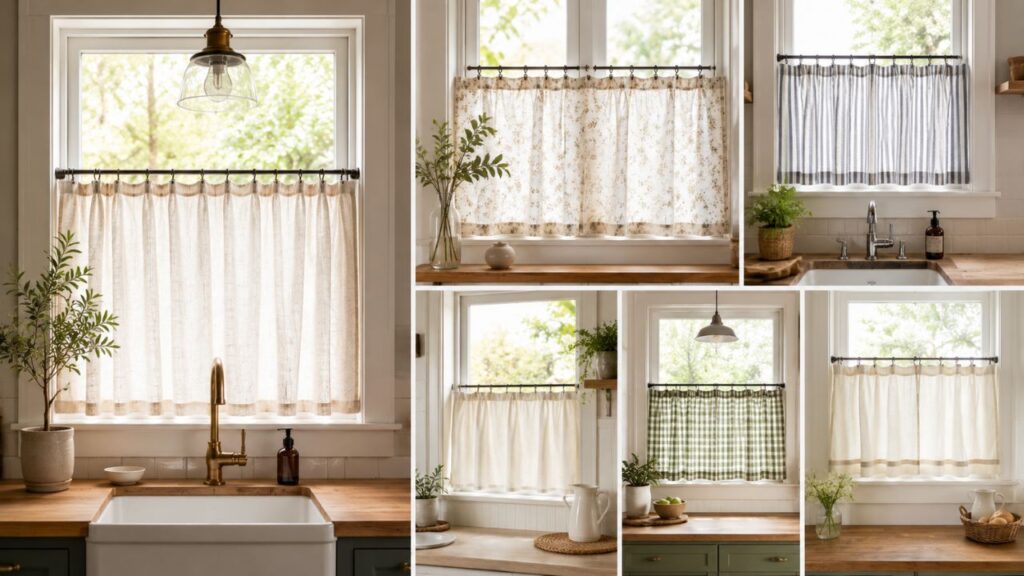
There’s something quietly charming about walking into a kitchen and seeing a crisp set of cafe curtains framing the lower half of a sunlit window. They let the light pour in from above while keeping the street view out — a balance that full-length drapes simply can’t replicate. It’s a small design choice that carries a surprisingly large impact on how a room feels.
Cafe curtains have been a staple of European bistros and American farmhouse kitchens for well over a century, and their appeal hasn’t faded. If anything, the renewed interest in cozy, character-filled interiors has brought them back into the spotlight in a big way. Designers who once dismissed them as old-fashioned are now recommending them as one of the most practical and stylish window treatments available.
What makes them worth your attention isn’t just aesthetics. It’s the way a well-chosen cafe curtain solves real problems — privacy without darkness, style without heaviness, and personality without clutter. Whether you’re decorating a first apartment or refreshing a home you’ve lived in for years, understanding how these curtains work will help you make a choice you’ll actually love living with.
What Are Cafe Curtains and Where Did They Come From?
The name gives it away. Cafe curtains originated in the small bistros and coffee shops of France, where proprietors needed a way to give seated customers privacy from passersby on the street without blocking the light entirely. The solution was elegant in its simplicity: hang a curtain panel across only the lower half of the window.
That practical origin story explains why the style has endured. It wasn’t designed to be decorative first — it was designed to solve a specific problem. The decorative appeal came naturally from the clean, uncluttered look that resulted.
By the early twentieth century, the style had crossed the Atlantic and found a natural home in American kitchens, where the same logic applied. You want privacy from neighbors while you’re at the sink, but you don’t want to lose the natural light that makes a kitchen feel alive. A cafe curtain delivers exactly that.
How They Differ from Other Window Treatments
Unlike full-length drapes, cafe curtains cover only the bottom portion of a window — typically the lower half, though some installations cover just the bottom third. Unlike valances, which cover only the top, cafe curtains prioritize privacy at eye level while leaving the upper portion completely open.
Roman shades and roller blinds offer similar privacy control, but they require you to choose between light and privacy. A cafe curtain gives you both simultaneously, which is why they remain uniquely practical in rooms where natural light matters.
The Best Rooms for Cafe Curtains in Your Home
Most people associate cafe curtains with kitchens, and for good reason — but limiting them to one room means missing out on some genuinely creative applications.
Cafe Curtains in the Kitchen
The cafe curtains kitchen pairing is the most natural in home design. Kitchens tend to have windows positioned above countertops or sinks, which means the lower half of the window sits at roughly eye level when you’re standing and working. That’s exactly where you want privacy.
A cafe curtains kitchen setup also handles the practical realities of cooking spaces well. Shorter panels don’t drag across countertops, they’re easier to launder when they pick up cooking smells or grease, and they don’t interfere with cabinet doors or appliances positioned near windows.
For a farmhouse kitchen, linen or cotton panels in white or natural tones work beautifully. For a more colorful, eclectic kitchen, printed fabrics — gingham, toile, or bold geometric patterns — can become a genuine focal point.
Bathrooms
Bathrooms are perhaps the most underrated location for a cafe curtain. Privacy is critical, but so is ventilation and light — especially in smaller bathrooms that can feel cave-like with heavy window treatments. A cafe curtain across the lower half of a bathroom window solves all three concerns at once.
Moisture-resistant fabrics like polyester blends or tightly woven cotton work best here. Avoid anything too sheer or delicate, since bathroom humidity will shorten the lifespan of more fragile textiles.
Living Rooms and Dining Rooms
In living spaces, cafe curtains work particularly well on street-facing windows in urban or suburban settings where foot traffic or neighboring homes create privacy concerns. Paired with a simple valance or left alone with a clean rod, they add a relaxed, European quality to a room without the formality of floor-length drapes.
Choosing the Right Fabric for Your Cafe Curtains
Fabric choice shapes everything — how the curtain hangs, how it filters light, how easy it is to maintain, and how long it lasts. This is where many people make their first mistake, choosing based on appearance alone without considering the practical demands of the room.
Cotton and Linen
Cotton and linen are the classic choices for cafe curtains, and they’ve earned that status. Both fabrics hang beautifully, launder well, and age gracefully. Linen in particular develops a lovely softness over time that synthetic fabrics can’t replicate.
The trade-off is that both wrinkle easily, which means you’ll either need to iron them regularly or embrace a slightly relaxed, lived-in look. For farmhouse, cottage, or Scandinavian-inspired interiors, that relaxed quality is actually part of the charm.
Sheer and Voile Fabrics
Sheer fabrics filter light beautifully and create an airy, romantic quality that heavier fabrics can’t match. They’re particularly effective in rooms that face a garden or a pleasant outdoor view, where you want to soften the window without obscuring what’s beyond it.
The privacy trade-off is real, though. Sheers provide visual softening rather than true privacy, especially at night when interior lighting makes everything visible from outside. In rooms where privacy matters most, layer a sheer cafe curtain with a simple roller blind for the best of both worlds.
Polyester and Synthetic Blends
Synthetic fabrics have improved dramatically in recent years. Modern polyester blends can convincingly mimic the look of linen or cotton while offering superior moisture resistance, wrinkle resistance, and colorfastness. For kitchens and bathrooms, a high-quality polyester blend is often the most practical choice.
The key is to avoid cheap, stiff polyester that looks obviously synthetic. Look for blends that include a percentage of natural fiber, or choose polyester fabrics specifically designed to drape softly.
Style Guide: Matching Cafe Curtains to Your Interior
A cafe curtain that clashes with your existing decor will always look like an afterthought, no matter how beautiful it is on its own. The goal is to choose a style that feels like it belongs — as if the room couldn’t look any other way.
[IMAGE: Infographic showing four cafe curtain styles — farmhouse linen, colorful gingham, sheer voile, and bold geometric print — matched to corresponding interior design aesthetics]
Farmhouse and Cottage Style
For farmhouse interiors, stick with natural materials and simple patterns. White or cream linen panels, buffalo check in black and white, or classic ticking stripe all work well. The hardware should feel unpretentious — simple wooden rods or matte black metal rather than ornate brass.
Cottage style allows for a bit more whimsy. Floral prints, soft pastels, and ruffled edges all feel at home in a cottage-inspired space. The key is keeping the scale of the pattern appropriate to the window size — large florals on a small window can feel overwhelming.
Modern and Minimalist Interiors
Clean-lined interiors call for clean-lined cafe curtains. Solid colors in muted tones — warm white, soft gray, dusty sage — work best. The fabric should hang crisply without excessive fullness, and the hardware should be simple and architectural: a slim metal rod in brushed nickel or matte black.
Avoid anything with ruffles, tassels, or decorative trim in a minimalist space. The curtain should feel like a considered design element, not a decorative flourish.
Traditional and Classic Interiors
Traditional spaces can handle more decorative detail. Toile de Jouy, damask, or classic stripe patterns all suit formal or traditional interiors. Brass or antique bronze hardware adds warmth and period-appropriate character.
In a traditional dining room, for example, a cafe curtain in a rich toile pattern can anchor the window beautifully while keeping the room feeling light and airy — something that heavy drapes in the same fabric would not achieve.
How to Hang Cafe Curtains Correctly
Even the most beautiful cafe curtains will look wrong if they’re hung incorrectly. Getting the installation right is straightforward once you understand a few key principles.
Determining the Right Height
The standard placement for a cafe curtain rod is at the midpoint of the window — exactly halfway between the sill and the top of the frame. This creates the classic half-window coverage that defines the style.
That said, you can adjust this based on your specific privacy needs. If your window sits low and neighbors can see in from a seated position, you might hang the rod slightly higher than the midpoint. If privacy is less of a concern and you simply want the decorative effect, hanging the rod at the lower third of the window creates a more relaxed, casual look.
Measuring for the Right Fullness
Fullness refers to how much fabric you use relative to the width of the window. A flat panel with no fullness looks modern and graphic. A panel with 1.5 to 2 times the window width in fabric creates soft, gentle folds. A panel with 2.5 to 3 times the width creates rich, full gathers.
For most cafe curtains kitchen applications, 1.5 to 2 times fullness strikes the right balance — enough fabric to look intentional, not so much that the window feels heavy.
Rod and Hardware Options
The rod you choose affects the entire look of the installation. Tension rods work for lightweight fabrics and require no drilling, making them ideal for renters. Café rods — slim, simple rods mounted with small brackets — are the traditional choice and work with virtually any fabric weight.
Clip rings give you flexibility to hang panels without sewn rod pockets, and they make it easy to swap fabrics seasonally. Tab-top panels create a casual, relaxed look. Rod-pocket panels offer a more tailored appearance.
Caring for and Maintaining Your Cafe Curtains
One of the underappreciated advantages of cafe curtains is how easy they are to maintain compared to full-length drapes. Their smaller size makes laundering straightforward, and their position away from the floor means they don’t collect dust and pet hair the way longer panels do.
Washing and Drying
Most cotton and linen cafe curtains can be machine washed on a gentle cycle in cool water. Remove them promptly from the dryer — or better yet, line dry them — to minimize wrinkles. Rehang them while slightly damp and let them finish drying in place; gravity will pull out most wrinkles naturally.
Sheer fabrics require more care. Wash them in a mesh laundry bag to prevent snagging, and always air dry rather than machine dry. Heat can damage delicate sheers and cause them to shrink or distort.
Keeping Colors Fresh
Direct sunlight will fade any fabric over time, and cafe curtains are particularly exposed since they’re designed to let light through. Choosing fabrics that are labeled as colorfast or UV-resistant will extend their life significantly.
Rotating panels seasonally — swapping a heavier winter fabric for a lighter summer one — also gives each set a rest from sun exposure and keeps your decor feeling fresh year-round.
[IMAGE: Close-up of a cafe curtain rod with clip rings holding a soft linen panel, showing the hardware detail against a white window frame]
Frequently Asked Questions
How long should cafe curtains be?
A cafe curtain typically covers the lower half of a window, so the panel length depends on where you mount the rod. Measure from the rod position to the windowsill and add about half an inch for clearance. Most standard cafe curtains range from 24 to 36 inches in length, but custom lengths are easy to find or sew yourself.
Can cafe curtains work in a rental apartment?
They’re actually one of the best window treatment options for renters. Tension rods require no drilling and leave no marks, making them ideal for rental situations. You can achieve the full cafe curtain look without touching the walls or window frame, and you can take the curtains with you when you move.
Do cafe curtains work on large windows?
Large windows can absolutely accommodate a cafe curtain style, but you’ll need to think about the scale of the panels and the hardware. For very wide windows, use multiple panels rather than trying to stretch a single panel across the full width. A continuous rod with multiple panels creates a cohesive look while managing the practical challenge of covering a wide span.
What’s the difference between a cafe curtain and a valance?
A valance covers the top portion of a window and is primarily decorative, adding visual interest without providing meaningful privacy. A cafe curtain covers the lower portion and prioritizes privacy at eye level while leaving the upper window open for light. The two can be combined — a valance at the top with a cafe curtain below — for a layered, traditional look.
Are cafe curtains out of style?
Design trends cycle, but the cafe curtain has proven remarkably durable precisely because it solves a real functional problem. The specific fabrics and patterns that feel current change over time, but the format itself remains relevant. Currently, linen cafe curtains in natural tones are particularly popular in the context of the broader interest in warm, textured, organic interiors.
How do I keep cafe curtains from looking cheap?
The biggest factors are fabric quality and proper fullness. Thin, stiff fabric that doesn’t drape well will always look inexpensive regardless of the pattern. Choose a fabric with enough weight to hang gracefully, use enough fullness to create soft folds, and invest in simple but well-made hardware. A well-executed cafe curtain in an inexpensive fabric will always look better than a poorly executed one in an expensive fabric.
Can I make my own cafe curtains?
Making your own is genuinely one of the easier sewing projects for home decor. A basic rod-pocket cafe curtain requires only straight seams — a hem on the sides and bottom, and a folded channel at the top for the rod. If you can sew a straight line, you can make a cafe curtain. The ability to choose your own fabric and cut panels to your exact window dimensions makes DIY particularly appealing for unusual window sizes.
A Window Treatment Worth Reconsidering
There’s a reason cafe curtains have outlasted dozens of window treatment trends that came and went over the past century. They work. They solve a real problem elegantly, they suit a wide range of interior styles, and they’re genuinely easy to live with — easy to hang, easy to launder, easy to swap out when you want a change.
The cafe curtains kitchen combination remains the most beloved application, and rightly so. But as you’ve seen throughout this guide, the format translates beautifully to bathrooms, living rooms, dining rooms, and beyond. The key is choosing the right fabric and style for the specific room and letting the curtain do what it was always designed to do: balance light and privacy with quiet, unpretentious elegance.
If your windows have been bare, or if you’ve been living with heavy drapes that make your rooms feel darker than they should, a simple cafe curtain might be the most impactful small change you can make. The right panel on the right window has a way of making an entire room feel more considered — and that’s a quality worth pursuing.