

Few home improvement projects deliver as much visual impact for the money as cabinet staining. Instead of replacing perfectly functional cabinetry, homeowners can completely transform the look and feel of their kitchens by enhancing the natural beauty of wood. The result often feels like a brand-new space without the expense and disruption of a full remodel.
Whether you’re updating an older kitchen, preparing a home for sale, or simply tired of outdated finishes, staining offers a practical and attractive solution. Unlike paint, which covers the wood grain, staining highlights the character and texture that make wood cabinets unique.
I’ve worked with homeowners who were convinced they needed entirely new cabinets. After seeing professionally refinished cabinetry, many were surprised that their existing cabinets could look so dramatically different. In many cases, a well-executed staining project becomes one of the highest-value improvements in the home.
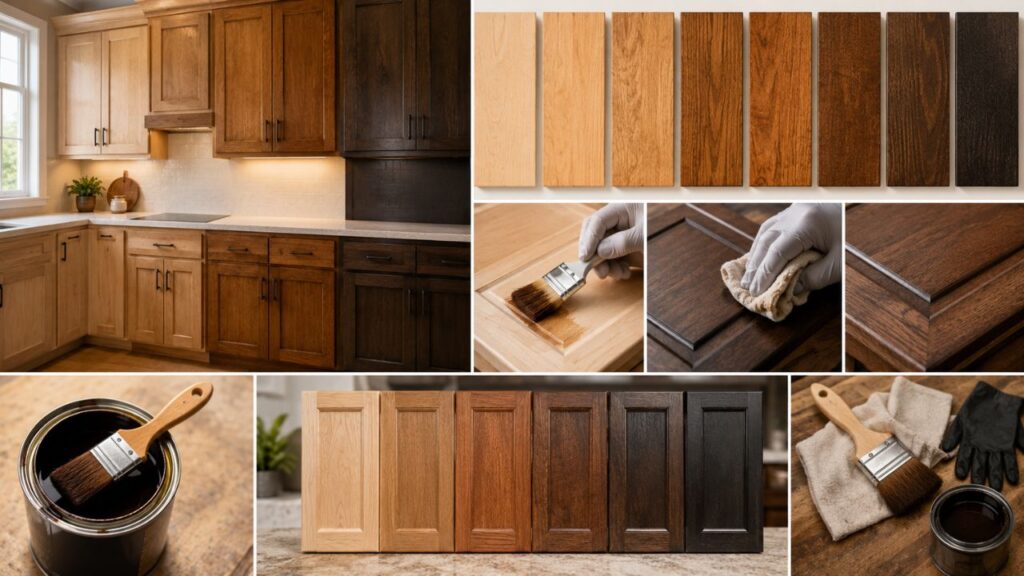
Understanding Cabinet Staining and How It Works
At its core, cabinet staining is the process of applying a penetrating color treatment to wood surfaces. Rather than creating a solid layer on top of the wood, stain absorbs into the fibers and enhances the grain patterns.
This creates depth, warmth, and natural variation that many homeowners prefer over painted finishes.
How Stain Differs from Paint
Paint completely covers the wood underneath. Stain, on the other hand, allows the texture and character of the wood to remain visible.
Benefits of staining include:
- Preserving natural wood grain
- Easier touch-ups in many situations
- Timeless appearance
- Greater depth and richness
- Wide variety of color options
Many homeowners choose stained kitchen cabinets because they create a warm, welcoming atmosphere that works with both traditional and modern designs.
Woods That Accept Stain Best
Not all cabinet materials respond equally to stain.
Excellent candidates include:
- Oak
- Maple
- Hickory
- Cherry
- Walnut
- Birch
Solid wood cabinets generally produce the most attractive results. Veneered cabinets can also be stained successfully if the veneer remains in good condition.
Why Homeowners Choose Stained Cabinets Over Replacement
Kitchen remodels can cost tens of thousands of dollars. Cabinet replacement alone often accounts for a large percentage of that budget.
Refinishing existing stained cabinets offers several advantages.
Significant Cost Savings
According to remodeling industry estimates, refinishing cabinets can cost substantially less than complete replacement.
Instead of paying for:
- Demolition
- Disposal
- New cabinetry
- Installation
- Potential plumbing adjustments
Homeowners can often achieve a dramatic visual upgrade while keeping existing cabinet structures intact.
Environmental Benefits
Reusing existing cabinets reduces construction waste.
Many older cabinets were built using higher-quality materials than some modern budget options. Preserving these cabinets often makes practical and environmental sense.
Faster Project Completion
A complete cabinet replacement can take weeks.
Most cabinet refinishing projects can be completed much faster, minimizing disruption to daily life.
[IMAGE: Beautiful stained oak kitchen cabinets with modern lighting and natural wood grain]
Popular Cabinet Stain Colors and Design Trends
One of the biggest decisions during a refinishing project involves selecting among available cabinet stain colors.
Color selection affects everything from perceived room size to overall design style.
Light Wood Stains
Lighter stains remain popular because they make kitchens feel larger and brighter.
Popular options include:
- Natural oak
- Honey maple
- Light walnut
- Golden oak
These colors work especially well in smaller kitchens with limited natural light.
Medium-Tone Stains
Medium tones offer excellent versatility.
Examples include:
- Provincial
- Special walnut
- Fruitwood
- Chestnut
These finishes complement a wide range of countertop and flooring materials.
Dark Stains
Dark finishes create a dramatic and luxurious appearance.
Popular choices include:
- Espresso
- Dark walnut
- Coffee brown
- Ebony
While beautiful, darker colors may make small kitchens feel more enclosed if not balanced with sufficient lighting.
Two-Tone Cabinet Designs
Many modern kitchens combine different cabinet stain colors to create visual interest.
Examples include:
- Dark island with lighter perimeter cabinets
- Natural wood uppers with darker lowers
- Mixed stain accents
This approach allows homeowners to introduce contrast without overwhelming the space.
Cabinet Staining Preparation: The Step Most People Underestimate
The quality of the final finish depends heavily on preparation.
Professionals often spend more time preparing than staining.
Removing Doors and Hardware
Every door, drawer front, hinge, and handle should be carefully removed and labeled.
This helps ensure accurate reinstallation later.
Cleaning Away Years of Buildup
Kitchen cabinets accumulate:
- Grease
- Cooking residue
- Dust
- Oils
A thorough degreasing process is essential before sanding begins.
Sanding for Proper Absorption
Sanding removes old finishes and creates a surface capable of accepting stain evenly.
Skipping this step often leads to:
- Blotchy color
- Uneven absorption
- Poor durability
Homeowners frequently discover that preparation determines whether cabinet staining looks professional or disappointing.
Step-by-Step Cabinet Staining Process
Once preparation is complete, the actual staining process begins.
Although details vary by wood species and product selection, the overall workflow remains similar.
Step 1: Test the Stain
Always test stain on an inconspicuous area or sample piece first.
Wood species absorb stain differently, making test applications invaluable.
Step 2: Apply Evenly
Use:
- Clean cloths
- Foam applicators
- Quality brushes
Work with the grain and maintain consistent coverage.
Step 3: Wipe Excess Product
After allowing the stain to penetrate, remove excess material.
This prevents sticky surfaces and uneven coloration.
Step 4: Evaluate Color Depth
Additional coats can deepen the appearance if desired.
Many homeowners seeking rich stained kitchen cabinets choose multiple applications to achieve greater depth.
Step 5: Seal and Protect
A protective topcoat helps resist:
- Moisture
- Scratches
- Daily wear
- Cleaning chemicals
Without proper sealing, even beautiful stained cabinets may deteriorate prematurely.
Common Cabinet Staining Mistakes and How to Avoid Them
Even experienced DIY enthusiasts can encounter problems during a refinishing project. Understanding the most common mistakes can save time, money, and frustration.
Choosing the Wrong Stain for the Wood Species
Different woods absorb stain differently.
For example:
- Oak typically accepts stain evenly.
- Maple can appear blotchy without proper conditioning.
- Pine often requires extra preparation.
Testing products before full application helps avoid costly surprises.
Rushing the Drying Process
Many homeowners become impatient and apply additional coats too soon.
When stain hasn’t fully cured, you may experience:
- Uneven color
- Sticky surfaces
- Poor topcoat adhesion
- Reduced durability
Always follow manufacturer recommendations regarding drying times.
Ignoring Lighting Conditions
A stain color can appear dramatically different depending on lighting.
Natural daylight, under-cabinet lighting, and ceiling fixtures all influence how cabinet stain colors appear once installed.
Whenever possible, evaluate samples under multiple lighting conditions before making a final decision.
Professional Cabinet Staining vs DIY: Which Is Right for You?
One of the biggest questions homeowners face is whether to hire a professional or tackle the project themselves.
The answer depends on budget, experience, timeline, and expectations.
When DIY Makes Sense
DIY projects may work well when:
- Cabinets are in good condition
- You have basic woodworking experience
- Time isn’t a major concern
- The kitchen is relatively small
Many successful DIY projects produce beautiful stained kitchen cabinets when homeowners carefully follow proper preparation and finishing techniques.
When Hiring a Professional Is Worth It
Professional refinishing often makes sense if:
- Cabinets have extensive wear
- Complex repairs are required
- You want premium results
- The project involves large kitchens
Professionals typically bring specialized tools, spray systems, and years of experience that help achieve consistent finishes.
How to Maintain Stained Cabinets for Long-Term Beauty
One reason homeowners continue choosing stained cabinets is their longevity. Proper maintenance can help preserve their appearance for many years.
Regular Cleaning
Use a soft microfiber cloth and a mild cleaning solution.
Avoid:
- Harsh abrasives
- Steel wool
- Bleach-based products
- Excessive water exposure
These products can damage protective finishes over time.
Addressing Minor Scratches
Small imperfections can often be repaired more easily than painted surfaces.
Touch-up markers and stain repair kits frequently blend well with existing finishes.
Managing Humidity Levels
Wood naturally expands and contracts with environmental changes.
Maintaining stable indoor humidity helps prevent:
- Cracking
- Warping
- Joint separation
Most wood experts recommend indoor humidity levels between 30% and 50% for optimal performance.
Cabinet Staining Costs: What Should You Expect?
Costs vary depending on kitchen size, cabinet condition, geographic location, and whether you choose professional services or DIY methods.
DIY Cost Estimates
Typical DIY expenses include:
- Sandpaper
- Degreaser
- Wood conditioner
- Stain
- Protective finish
- Brushes and applicators
Many homeowners complete smaller projects for a few hundred dollars.
Professional Refinishing Costs
Professional pricing typically depends on:
- Number of cabinet doors
- Drawer fronts
- Repair requirements
- Selected finish system
- Labor rates in your area
In most cases, refinishing remains substantially less expensive than complete cabinet replacement.
Factors That Influence Price
Additional costs may arise from:
- Structural repairs
- Hardware replacement
- Custom color matching
- Specialty finishes
- Extensive prep work
Obtaining multiple estimates helps establish realistic expectations.
Choosing the Best Cabinet Stain Colors for Your Kitchen Style
Color selection should complement the overall design of your home.
Rather than following trends blindly, consider how your kitchen functions and how long you plan to keep the design.
Traditional Kitchens
Traditional spaces often work well with:
- Cherry tones
- Medium walnut
- Rich mahogany
- Warm oak finishes
These timeless choices continue to perform well in resale situations.
Modern Kitchens
Contemporary designs often feature:
- Light natural finishes
- White oak-inspired tones
- Soft gray-brown stains
- Minimalist wood finishes
Modern homeowners frequently select lighter cabinet stain colors to create airy, open environments.
Farmhouse and Transitional Designs
These popular styles often incorporate:
- Weathered finishes
- Rustic oak
- Light walnut
- Medium brown tones
The goal is usually warmth and character rather than dramatic contrast.
Matching Countertops and Flooring
Before selecting final cabinet stain colors, consider surrounding materials.
Pay attention to:
- Flooring undertones
- Countertop patterns
- Backsplash colors
- Wall paint selections
A coordinated approach creates a more cohesive and professionally designed space.
Frequently Asked Questions
How long does cabinet staining typically last?
A professionally completed cabinet staining project can last 10 to 20 years or longer with proper care. Longevity depends on usage, maintenance habits, and the quality of the protective finish.
Can previously painted cabinets be stained?
In some situations, yes. However, all paint must be completely removed before staining. The process can be labor-intensive because wood grain needs to be exposed evenly for proper stain absorption.
Which wood species produces the best stained finish?
Oak, cherry, walnut, and hickory are generally considered excellent candidates. Their natural grain patterns enhance the visual depth that homeowners often seek in stained finishes.
Are dark stained cabinets going out of style?
Not necessarily. Design preferences evolve, but dark wood finishes remain popular in luxury kitchens and traditional homes. The key is balancing darker cabinetry with adequate lighting and complementary materials.
Can cabinet stain colors be changed later?
Yes. Existing finishes can often be sanded and refinished with a different color. The complexity depends on the current finish, wood species, and desired final appearance.
How long does a professional refinishing project take?
Most kitchens require several days to two weeks, depending on project size and drying conditions. Larger kitchens or custom finishes may require additional time.
What’s the difference between refinishing and refacing cabinets?
Refinishing keeps existing cabinet boxes, doors, and drawer fronts while updating the finish. Refacing replaces visible surfaces while retaining cabinet structures underneath.
Do stained kitchen cabinets increase home value?
While results vary by market, updated kitchens generally attract buyers. Well-maintained stained kitchen cabinets often contribute positively to overall home appeal and perceived quality.
Are stained cabinets harder to maintain than painted cabinets?
Not usually. Both require routine cleaning and occasional touch-ups. Many homeowners find stained cabinets easier to repair because minor scratches may blend more naturally into wood grain patterns.
What is the most popular cabinet stain color today?
Medium natural walnut tones and lighter white-oak-inspired finishes are among the most requested options. Preferences vary by region, home style, and personal taste.
Final Thoughts
A successful cabinet staining project does far more than change color. It highlights the natural beauty of wood, extends the life of existing cabinetry, and creates a kitchen that feels refreshed without the expense of complete replacement.
Whether you choose rich traditional tones, modern natural finishes, or custom combinations of cabinet stain colors, the key lies in careful preparation, quality materials, and attention to detail. Homeowners who invest time in planning typically enjoy results that remain attractive for many years.
The best projects balance aesthetics, practicality, and long-term value. When done correctly, beautifully maintained stained kitchen cabinets can become one of the most admired features in your home, providing warmth, character, and lasting appeal long after design trends have changed.
Local Customer Questions & Answers
How much does cabinet staining cost near me?
Cabinet staining costs vary based on kitchen size, cabinet condition, and local labor rates. Most homeowners pay significantly less than a full cabinet replacement, making it one of the most cost-effective kitchen upgrades.
How long does cabinet staining take?
Most projects take anywhere from a few days to two weeks. The timeline depends on preparation work, drying conditions, and the number of cabinets involved.
Can you stain my existing kitchen cabinets instead of replacing them?
Yes, in many cases existing cabinets can be refinished successfully if the structure remains solid. This allows homeowners to update their kitchen without the expense of new cabinetry.
What are the most popular cabinet stain colors right now?
Natural walnut, light oak, medium brown, and warm wood tones remain popular choices. Many homeowners also choose custom cabinet stain colors that complement their flooring and countertops.
Do stained kitchen cabinets increase home value?
Updated kitchens often appeal to buyers, and professionally refinished stained kitchen cabinets can improve the overall appearance and perceived value of a home.
How do I know if my cabinets are good candidates for staining?
Solid wood cabinets typically work best. A professional inspection can determine whether your current cabinets can be successfully refinished.
What’s the difference between painting and cabinet staining?
Painting covers the wood grain completely, while cabinet staining enhances the natural grain and texture of the wood. Many homeowners prefer the warm, authentic look that stain provides.
Can damaged stained cabinets be repaired?
Minor scratches, wear marks, and finish issues can often be repaired without replacing the cabinets. The repair method depends on the extent of the damage.
How do I maintain stained cabinets after refinishing?
Regular dusting, gentle cleaning products, and avoiding excessive moisture will help maintain stained cabinets for many years.
Do darker stained cabinets make a kitchen look smaller?
They can in some spaces. However, proper lighting, lighter countertops, and thoughtful design choices often balance darker cabinetry effectively.
Can cabinet staining be done while I live in the house?
Yes. Most professional refinishing companies use processes that allow homeowners to remain in their homes during the project, although temporary kitchen disruption should be expected.
How often do stained kitchen cabinets need refinishing?
With proper care, stained kitchen cabinets can maintain their appearance for a decade or longer before requiring significant refinishing.
Should I choose light or dark cabinet stain colors?
The best choice depends on room size, lighting, design style, and personal preference. Viewing samples in your own kitchen helps ensure the right decision.
How can I find a reliable cabinet staining company near me?
Look for businesses with verified reviews, before-and-after project photos, clear estimates, and experience working with wood cabinetry. Ask about preparation methods, finishing products, and warranty coverage.
Are stained cabinets still in style?
Yes. Stained cabinets remain a timeless design choice because they showcase natural wood beauty and complement a wide range of kitchen styles.