Blank walls can feel unfinished. But covering them without a plan? That often ends up looking chaotic rather than collected. That’s exactly why gallery wall ideas have become one of the most popular design solutions for homeowners and renters alike. A well-planned gallery wall turns empty vertical space into a conversation starter, a memory keeper, or an artful focal point.
Whether you’re starting from scratch or refreshing an existing setup, this guide covers everything you need: from how to make a gallery wall that feels balanced, to specific gallery wall living room layouts, photo wall ideas, and even canvas gallery wall ideas for larger pieces. You’ll find gallery wall inspo for every style, plus practical advice on gallery wall layout, frame selection, and avoiding common mistakes.
Why a Gallery Wall Works Better Than a Single Large Print
A single piece of art is simple. But a gallery wall gives you flexibility. You can layer in family photos, vintage finds, kids’ drawings, textiles, and small sculptures. It grows with you. Swap one piece without redoing the whole arrangement. Add a new print from Desenio or a thrifted mirror. The result feels personal, layered, and endlessly adaptable.
Plus, gallery wall art doesn’t require expensive originals. Well-chosen prints, postcards, and personal photographs work beautifully together.
Gallery Wall Living Room: Creating a Focal Point That Feels Intentional
The living room is the most common place for a gallery wall. It’s where you entertain, relax, and spend the most time. A living room gallery wall should feel cohesive without being matchy-matchy.
Where to Place Your Living Room Gallery Wall
- Above the sofa (most classic)
- On a large empty wall opposite windows
- Flanking a media console or fireplace
- Along a staircase wall that opens into the living area
Living Room Photo Wall Ideas That Work
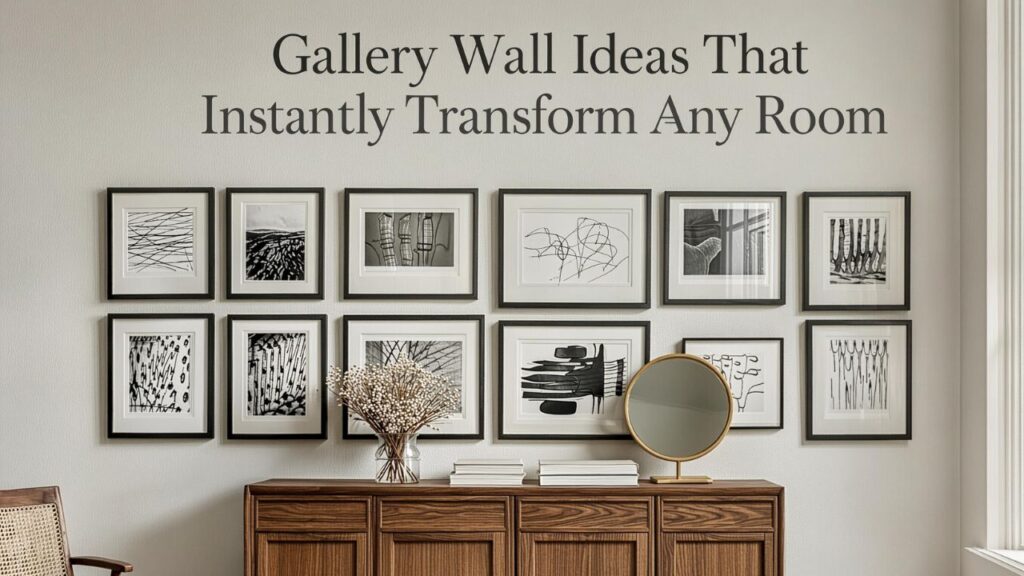
For a living room photo wall, mix black-and-white family shots with one or two brighter art prints. Keep frames in a consistent finish—all black, all oak, or all brass—to tie different photo styles together. If you want a more collected look, vary frame styles but stick to a limited color palette (e.g., white, wood, and gold).
Pro tip: Use your largest piece as the anchor. Build the rest of the gallery wall layout around it, keeping 2–3 inches between frames.
How to Make a Gallery Wall: A Step-by-Step Framework
If you’ve never hung a gallery wall before, the process can feel intimidating. Break it down into these steps.
Step 1: Gather Your Pieces
Collect everything you might want to include: framed art, photos on wall space, mirrors, woven baskets, small signs, or even a wall-mounted shelf. Aim for 7–15 pieces depending on your wall size. For a gallery wall layout 7 frames is a perfect starter number.
Step 2: Choose a Layout Style
Common wall collage layout ideas include:
- Grid (formal, modern)
- Salon style (eclectic, tightly packed)
- Linear (single row or column)
- Asymmetrical (organic, balanced by visual weight)
Step 3: Trace and Tape
Cut paper templates of each frame. Use painter’s tape to arrange them on the wall. This prevents unnecessary nail holes and lets you test different picture wall layouts before committing.
Step 4: Hang from the Center Out
Start with your anchor piece at eye level (about 57–60 inches to center). Work outward, following your taped template.
Step 5: Step Back Often
Take photos as you go. A camera lens often reveals spacing issues your eyes might miss.
Gallery Wall Layout Secrets Designers Use
The difference between a chaotic wall and a curated one is almost always the gallery wall layout. Here are specific picture wall layout strategies that work every time.
The Grid Layout
Use identical frame sizes and equal spacing. Best for modern, minimalist, or canvas gallery wall ideas where the art itself provides variety but the structure stays clean.
The Salon Hang
Tightly packed, floor-to-ceiling, frame edges close together. This works beautifully for mixed media gallery wall approaches: combine oil paintings, pencil drawings, textile art, and sculptural objects. Go wider rather than taller for easier viewing.
The Staircase Follow
Hang pieces following the angle of your stairs. Each frame should sit at the same visual distance from the stair treads. Use gallery wall layout 7 frames in a staggered diagonal for a dynamic look.
The Shelf-Integrated Wall
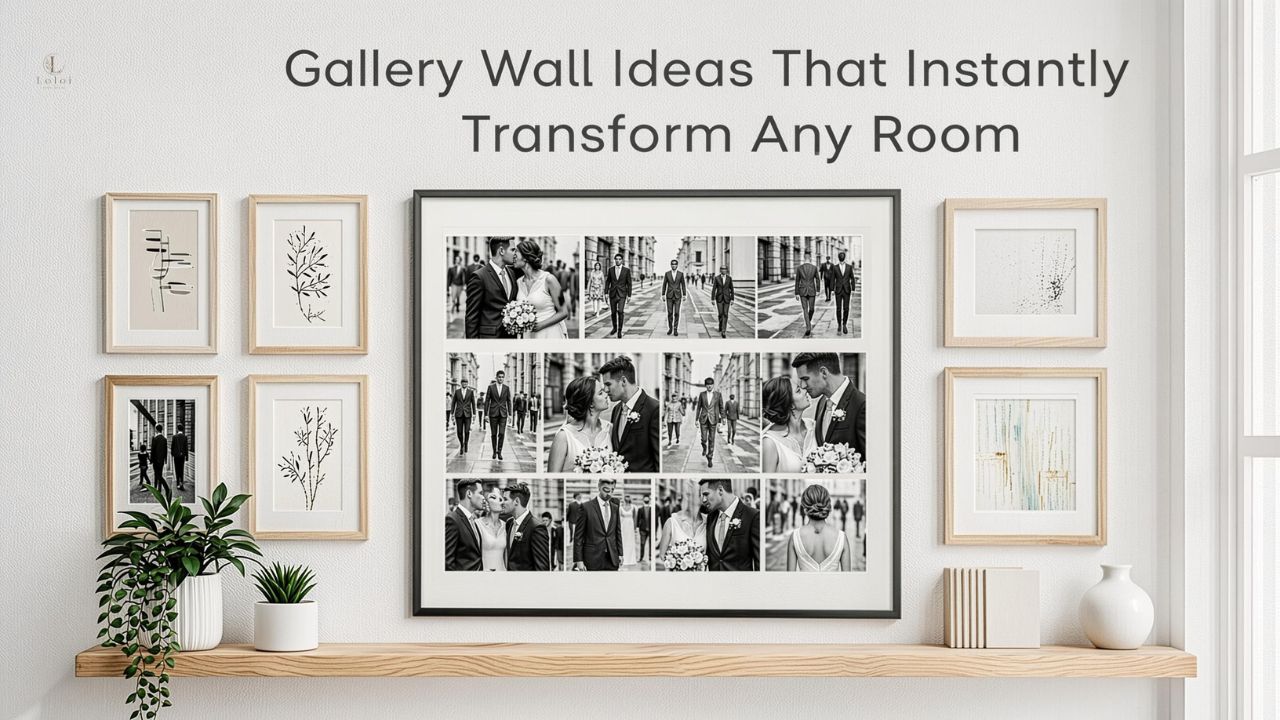
Install a long floating shelf. Lean larger pieces on the shelf, then hang smaller frames above. This makes it easier to swap art and works well for renters who want to minimize holes.
Photo Wall Ideas for Every Room in Your Home
While photo wall ideas often focus on family pictures, you can adapt the concept for any room.
Bedroom Photo Wall Ideas
Keep the vibe calm. Use soft black-and-white photos, botanical prints, or travel shots. Place the photos on wall above the headboard but keep the arrangement lower and wider than the bed to maintain visual balance.
Hallway Gallery Wall
Hallways are perfect for gallery wall inspiration because you walk close to the art. Use smaller frames (5×7 and 8×10) and hang at eye level. A linear layout works well here.
Kitchen Gallery Wall
Surprisingly effective. Use food-related prints, vintage recipe cards in small frames, or colorful ceramic plates as part of a mixed media gallery wall. Keep frames simple and easy to wipe clean.
Home Office Gallery Wall
Motivation meets personality. Mix career awards, inspiring art, and personal photos. A gallery wall art setup with a few empty frames you can rotate keeps things fresh.
Canvas Gallery Wall Ideas for Large-Format Impact
Canvas gallery wall ideas differ from standard frame arrangements because canvas wraps have depth and no glass. They feel more substantial.
Best Practices for Canvas Walls
- Hang canvases with at least 3–4 inches between them
- Mix canvas sizes (a large 24×36 with two 12×12 pieces)
- Pair stretched canvas with one framed piece to add texture contrast
- Avoid hanging canvas in direct sunlight to prevent fading
Three-Canvas Sets
A triptych of matching canvas gallery wall pieces works well above a sofa or bed. For a less predictable look, use three different but color-coordinated canvases.
Mixed Media Gallery Wall: Beyond Just Frames
A mixed media gallery wall includes items that aren’t traditional framed art. This approach adds depth and personality.
What to Include in a Mixed Media Display
- Small wall sculptures
- Woven wall hangings
- Vintage mirrors (different shapes)
- Mounted butterflies or botanicals (ethically sourced)
- Kids’ art in simple clip frames
- Postcards from travels
- Small chalkboard or whiteboard
- Wall-mounted planters (with faux or real plants)
The key to a successful mixed media gallery wall is balance. If you add a bulky item like a sculptural mask, surround it with flatter, simpler pieces. If you include a mirror, place it where it reflects something attractive—not a blank wall or clutter.
Desenio and Other Print Shops for Affordable Gallery Wall Art
You don’t need an art degree or a huge budget. Brands like Desenio offer curated, affordable prints in standardized sizes. This makes planning a gallery wall much easier because you can buy frames and prints that fit perfectly together.
Why Desenio Works for Gallery Walls
- Consistent size options (8×10, 12×16, 20×28)
- Bundled gallery wall sets with pre-planned layouts
- Wide range of styles from abstract to botanical to typography
Other good sources: Etsy for digital downloads, local thrift stores for unique vintage pieces, and even your own smartphone photos printed at a shop.
Pottery Barn Gallery Wall Aesthetic Without the Price Tag
Pottery Barn gallery wall displays often feature a refined, neutral palette: lots of white mats, natural wood frames, and black-and-white photography. You can copy this look for less.
How to Recreate the Pottery Barn Gallery Wall Look
- Use matted frames (3-inch white mat minimum)
- Stick to three frame finishes: black, natural oak, and antique gold
- Limit art to black-and-white photography, botanical sketches, and simple line drawings
- Keep spacing wider (3–4 inches) for a more airy feel
- Include one large mirror as an anchor piece
This approach works especially well for a gallery wall living room that leans traditional or transitional.
Common Mistakes When Creating a Gallery Wall (And How to Fix Them)
Even with great gallery wall ideas, small errors can throw off the whole look.
Hanging Too High or Too Low
The center of your gallery wall should be at approximately 57–60 inches from the floor. This is standard museum height. For areas where people sit (like above a sofa), you can hang slightly lower.
Spacing Inconsistently
Pick a standard gap (2 inches is safe for most layouts) and stick to it. Use a spacer or a piece of cardboard cut to size.
Using Frames That Compete
Mix frame styles, but keep a unifying element. That could be all black-and-white photos, all wood tones from the same family, or all simple profiles. Too many ornate frames with modern prints and wildly different colors creates visual noise.
Forgetting About Wall Color
A gallery wall on a white wall needs more contrast. Dark walls make light frames pop. If your wall is busy (e.g., bold wallpaper), use very simple frames and larger mat areas to give the eye a rest.
Gallery Wall Layout 7 Frames: A Specific Starter Plan
If you’re overwhelmed, start with exactly gallery wall layout 7 frames. This number gives you enough variety without becoming chaotic.
The 7-Frame Blueprint
- 1 large anchor piece (16×20 or larger)
- 2 medium pieces (11×14)
- 4 small pieces (5×7 or 8×10)
Arrange them in a loose rectangle. Place the large piece off-center, not dead middle. Cluster small pieces near the edges to balance the visual weight. Use an online wall collage layout ideas tool or the paper template method described earlier.
Photos on Wall: How to Arrange Family Pictures Without Looking Chaotic
Family photos on wall can feel cluttered if every frame is a different size, color, and subject. Here’s how to create cohesion.
Color-Consistent Framing
Use the same frame finish for every family photo. Black or white works universally. Then vary the art prints around them with different frames.
Black-and-White Only
Convert all family photos to black-and-white. This instantly unifies images taken years apart, in different lighting, with different outfits and backgrounds.
Themed Grouping
Group photos by theme: all vacation shots together, all newborn photos in one cluster, all grandparent portraits in another. Then arrange those clusters within the larger gallery wall.
Gallery Wall Art Selection: Size, Color, and Subject Matter
Choosing gallery wall art isn’t just about what you like. It’s about how pieces work together.
Size Rules
- Vary sizes but include at least one large piece (18×24 or bigger)
- Avoid having more than two pieces the exact same size
- Small pieces (4×6 or 5×7) should be grouped in clusters of three or more
Color Rules
Pull colors from your room’s existing palette. If your sofa is blue, include art with small blue accents. A gallery wall doesn’t have to match your room perfectly, but it should feel connected.
Subject Matter Rules
Mix subjects: portraits + landscapes + abstracts + typography. A wall of only faces feels heavy. A wall of only flowers feels repetitive. Three distinct subjects keep the eye moving.
Gallery Wall Inspo by Room Size
Small Room Gallery Wall
Go vertical. A tall, narrow gallery wall draws the eye up and makes ceilings feel higher. Use smaller frames (max 11×14) and keep spacing tight (1.5 inches).
Large Room Gallery Wall
Go wide. A sprawling gallery wall can fill a massive empty wall. Use oversized pieces, include furniture-like objects (a wall-mounted desk with art above), and consider a salon-style hang that goes nearly floor-to-ceiling.
Awkward Wall (Between Windows, Above a Door)
Use a linear picture wall layout. Hang three to five identically sized pieces in a row. This turns an awkward space into an intentional design feature.
How to Update an Existing Gallery Wall Without Starting Over
You don’t need to redo everything. Refresh your gallery wall by:
- Swapping 2–3 smaller pieces for new ones
- Changing frame mats (white to cream, or colored mats for a pop)
- Adding one mixed media gallery wall element like a small clock or textile
- Removing one piece that feels off and living with the gap for a week before replacing it
DIY Gallery Wall on a Budget
You can build a stunning gallery wall for under $100.
Budget Sources
- Thrift store frames (spray paint them the same color for instant cohesion)
- Free printable art (search “free vintage botanical prints” or “free art prints PDF”)
- Your own photos printed at a drugstore
- Kids’ art in dollar-store frames
- Calendar pages from last year’s art calendar
The Frugal Layout Trick
Buy one nice, large frame from a home goods store. Fill it with a free print. Then surround it with five to seven thrifted frames spray-painted to match. No one will guess the whole thing cost under $50.
Gallery Wall Lighting: The Finishing Touch
Even the best gallery wall ideas look flat without proper lighting.
Best Lighting Options
- Picture lights mounted above the top center piece
- Adjustable track lighting aimed at the wall
- Battery-operated puck lights hidden behind frame tops (creates a glow)
- Natural light from a nearby window (avoid direct sunlight on valuable art)
Avoid relying on overhead ceiling lights. They cast shadows from your head onto the art when you stand near the wall.
FAQ
How high should I hang a gallery wall?
The center of the overall arrangement should be at 57–60 inches from the floor. For a gallery wall above a sofa, leave 6–10 inches between the top of the sofa and the bottom of the lowest frame.
How many pieces do I need for a gallery wall?
Start with 7 pieces for a small to medium wall. For a large gallery wall living room, 11–15 pieces often works well. Gallery wall layout 7 frames is a perfect beginner number.
Can I mix frame colors and styles?
Yes. The most interesting gallery wall ideas mix frames. But keep one unifying element: all black-and-white photos, all wood tones from the same family, or all simple profiles. Avoid mixing ornate gold with chunky modern black with rustic barnwood unless you have a very skilled eye.
What’s the best way to plan a gallery wall layout without putting holes in the wall?
Use paper templates taped to the wall. Cut craft paper to the exact size and shape of each frame. Arrange the templates with painter’s tape. Live with the arrangement for a day before hanging.
How do I choose art for a mixed media gallery wall?
Start with one or two non-frame items (mirror, textile, small shelf). Then add framed art. Keep the color palette limited to 3–4 colors across all pieces. Balance bulky items with flat ones.
Is Desenio good for gallery walls?
Yes. Desenio offers coordinated print sets and standardized sizing, which makes planning a gallery wall much easier. Their gallery wall ideas bundles include layout suggestions.
Can I do a gallery wall in a rental without damaging walls?
Absolutely. Use adhesive hanging strips rated for the weight of your frames. Avoid strips on very textured walls or wallpaper. For lightweight photo wall ideas, washi tape can work temporarily, but proper strips are more secure.
What’s the biggest mistake people make?
Hanging everything at different heights with uneven spacing. Pick a spacing rule (2 inches is standard) and use a spacer. The second biggest mistake is hanging too high.
Conclusion
A great gallery wall doesn’t happen by accident. It comes from thoughtful gallery wall layout, a mix of sizes and subjects, and a clear sense of how the wall interacts with your room. Whether you’re building a gallery wall living room centerpiece, a mixed media gallery wall full of treasures, or a simple photo wall of family memories, the principles are the same: plan before you pound nails, unify your pieces with color or frame choices, and don’t be afraid to edit.
Start with gallery wall ideas that excite you. Gather your pieces. Tape up templates. And enjoy the process of creating a wall that tells your story—one frame at a time.