A bathroom cabinet can look calm and styled on the outside while hiding a whole mess of half-used lotions, mystery hair products, tangled cords, and expired medicine behind the doors. If you have ever opened yours and had three things fall out before your morning coffee, you are not alone. Learning how to organize bathroom cabinet storage is one of those small home projects that can make daily life feel noticeably easier.
In many American homes, the bathroom has to work harder than its square footage suggests. A primary bath may hold skincare, hair tools, towels, medications, cleaning supplies, and backup toiletries. A rental apartment bathroom might have one tiny vanity and no linen closet at all. A family bathroom may need to serve adults, kids, guests, and pets.
The good news is that you do not need a custom built-in cabinet or a luxury remodel to create a better system. With a little editing, smart zoning, and a few practical organizers, your bathroom cabinet can become cleaner, safer, easier to maintain, and much more pleasant to use.
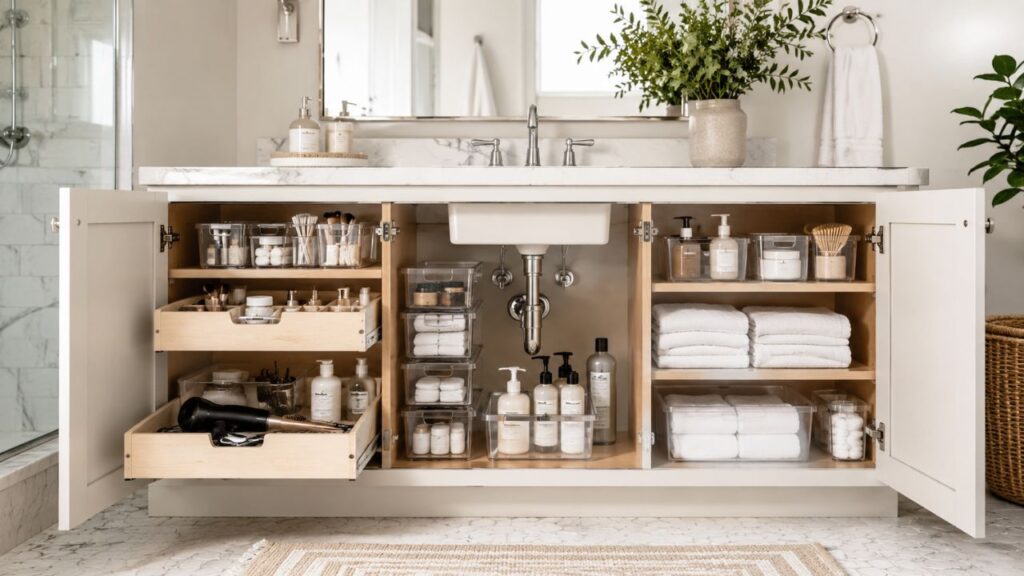
Why Bathroom Cabinets Get Messy So Quickly
Bathroom cabinets are small, enclosed, and usually shared. That combination makes clutter build up fast. Unlike a bedroom dresser or kitchen pantry, bathroom storage often holds many unrelated categories in one place: grooming tools, medicine, first-aid supplies, toilet paper, makeup, soap refills, travel items, cleaning sprays, and personal care products.
Moisture also plays a role. Bathrooms are humid, so packaging can warp, labels can peel, and products can become sticky or dusty over time. When you cannot clearly see what you own, you buy duplicates. Then the cabinet gets fuller, harder to use, and easier to ignore.
A well-organized bathroom cabinet solves three problems at once:
- It helps you find what you need quickly.
- It keeps daily routines smoother and less stressful.
- It protects your products from clutter, spills, and overbuying.
The goal is not to make your cabinet look like a staged photo. The goal is to create a system that works on a Tuesday morning when someone is running late, the sink is wet, and the toothpaste cap has disappeared again.
Start With a Full Cabinet Reset
Before buying bins or labels, empty the cabinet completely. This step feels inconvenient, but it is the fastest way to understand what you actually own.
Place everything on a towel, bath mat, or folding table. Wipe down the cabinet shelves, interior walls, doors, and drawer tracks if you have them. Use a mild cleaner and let the surfaces dry before putting anything back.
As you remove items, group them loosely by category:
- Daily skincare
- Hair care
- Makeup
- Shaving supplies
- Dental care
- First aid
- Medicine
- Cleaning supplies
- Backup toiletries
- Travel-size products
- Towels and washcloths
- Feminine care products
- Kids’ bath items
- Guest supplies
This first sort tells you what kind of storage you need. A cabinet packed with hair tools needs heat-safe cord storage. A family cabinet needs kid-friendly zones. A small apartment vanity may need stackable bins, door storage, and under-sink solutions.
Check Expiration Dates and Product Condition
Bathroom cabinets are notorious for holding expired sunscreen, old prescriptions, dried mascara, separated lotions, and sample products no one uses. Be honest while sorting.
Toss or properly dispose of:
- Expired medicine
- Old prescriptions you no longer need
- Sunscreen past its expiration date
- Makeup with changed smell, texture, or color
- Rusty razors
- Nearly empty bottles you will not finish
- Products that irritated your skin
- Duplicate items you do not realistically use
- Damp, warped, or leaking packaging
For medication, check local disposal guidelines. Many pharmacies and police departments in the United States offer safe medicine disposal boxes or take-back events. Avoid keeping unnecessary prescriptions in a humid bathroom cabinet, especially if children or guests use the bathroom.
Keep Only What Belongs in the Bathroom
Not everything that is currently in your bathroom cabinet should stay there. Some products last longer in a cooler, drier place. If your bathroom gets very steamy, consider storing extra skincare, backup medications, and bulk paper products in a hall closet, bedroom dresser, or utility cabinet.
A simple rule helps: keep daily-use items within easy reach, occasional-use items in secondary storage, and bulk extras somewhere else when possible.
Measure Before You Buy Organizers
Bathroom cabinets vary widely. Some vanities have deep under-sink storage with awkward plumbing. Others have shallow shelves, narrow drawers, or medicine cabinet-style doors. Before purchasing organizers, measure the interior.
Write down:
- Cabinet width
- Cabinet depth
- Shelf height
- Drawer height, width, and depth
- Distance around plumbing
- Door clearance
- Space between shelves
- Any hinges, pipes, or outlets that affect placement
This matters because many organizers look helpful online but waste space in real cabinets. A 12-inch-deep bin will not work well in a 10-inch-deep vanity. A tall turntable may not clear a shelf. A drawer divider may block the drawer from closing if it is too high.
For renters, measuring is even more important because you may not be able to drill, add permanent shelves, or modify the vanity. Choose removable, freestanding, adhesive, or tension-style products instead.
Create Zones Based on Real Routines
A good bathroom cabinet is organized by behavior, not just by category. Think about how the bathroom is used throughout the day.
For example, a morning routine zone might include face wash, moisturizer, deodorant, hairbrush, contacts, and styling cream. A bedtime zone might include cleanser, retinol, lip balm, floss, and a sleep mask. A kids’ bath zone might include detangling spray, bath toys, lotion, and hair ties.
This approach keeps useful items together and prevents the cabinet from becoming a random collection of containers.
Everyday Zone
The everyday zone should be the easiest to access. This is prime cabinet real estate: eye level, front of drawer, top bin, or the most reachable shelf.
Good everyday-zone items include:
- Toothpaste and floss
- Deodorant
- Face wash
- Moisturizer
- Hairbrush or comb
- Contact lens supplies
- Daily makeup
- Shaving items
- Frequently used hair products
If you share a bathroom, consider giving each person a small personal bin. This works well in family homes, dorm-style bathrooms, shared apartments, and guest bathrooms used by teens or roommates.
Occasional-Use Zone
Occasional-use items do not need the best spot. These can go toward the back of a cabinet, on a higher shelf, or in a labeled bin.
Examples include:
- Face masks
- Self-tanner
- Nail polish
- Special occasion makeup
- Extra razors
- Hair treatment products
- Travel toiletry bags
- Backup toothbrushes
Keep these items visible enough that you remember they exist, but not so accessible that they crowd your daily routine.
Backup Zone
Bulk buying can save money, especially for families, but backup items can overwhelm a small vanity. Assign one contained backup zone.
This zone might hold:
- Extra toothpaste
- Soap refills
- Shampoo and conditioner backups
- Cotton swabs
- Cotton rounds
- Toilet paper
- Extra deodorant
- Replacement razor heads
The key is containment. Once the backup bin is full, pause before buying more. This keeps budget-friendly stocking up from turning into cabinet chaos.
Choose the Right Organizers for Your Cabinet Type
The best bathroom cabinet organizers depend on the shape of your storage. A deep under-sink cabinet needs different solutions than a shallow medicine cabinet or narrow drawer.
Clear Bins
Clear bins are one of the easiest choices for bathroom cabinets because they let you see what is inside. They work especially well for skincare, hair products, dental supplies, and backup toiletries.
Pros:
- Easy to see contents
- Simple to clean
- Good for renters
- Available in many sizes
- Useful for grouping categories
Cons:
- Can look messy if overfilled
- Some plastics scratch or cloud over time
- Not always ideal for tall bottles
Best for: renters, apartment bathrooms, shared cabinets, kids’ bathrooms, and anyone who wants a low-maintenance system.
Stackable Drawers
Stackable drawers make use of vertical space, especially under the sink. They are useful when shelves are limited or when plumbing leaves awkward gaps.
Pros:
- Adds drawer-like storage to open cabinets
- Keeps small items contained
- Uses height efficiently
- Easy to assign by category
Cons:
- Must fit around pipes
- Cheap versions may stick or wobble
- Deep drawers can become junk drawers without dividers
Best for: under-sink vanities, small bathrooms, makeup storage, hair accessories, first-aid supplies, and rental bathrooms.
Turntables
A turntable, often called a lazy Susan, can be helpful for bottles and jars. It lets you spin items forward instead of digging through the back of a shelf.
Pros:
- Great for bottles
- Prevents lost items in back corners
- Easy to use
- Helpful for skincare and hair products
Cons:
- Round shape can waste corner space
- Not ideal for narrow cabinets
- Tall bottles may tip if the turntable has a low rim
Best for: skincare, hair products, body lotions, cleaning products, and cabinets with enough shelf depth.
Pull-Out Baskets
Pull-out baskets are excellent for deep cabinets because they bring items forward. Some require screws, while others are freestanding.
Pros:
- Makes deep cabinets more accessible
- Great for heavier products
- Reduces bending and reaching
- Can create a custom feel without a remodel
Cons:
- Some need installation
- May not work around plumbing
- Can be more expensive than bins
Best for: homeowners, larger vanities, primary bathrooms, and anyone with deep under-sink storage.
Door-Mounted Storage
The inside of a cabinet door is often unused space. Adhesive bins, over-the-door racks, and slim organizers can hold smaller items without taking up shelf space.
Pros:
- Uses vertical hidden space
- Great for small bathrooms
- Keeps daily items easy to reach
- Often renter-friendly if adhesive is removable
Cons:
- Must clear shelves when the door closes
- Heavy items may loosen adhesive
- Not ideal for fragile glass bottles
Best for: toothpaste, floss, hair ties, brushes, razors, small skincare tubes, and cleaning gloves.
Drawer Dividers
If your bathroom vanity has drawers, dividers are essential. Without them, small items slide around and mix together.
Pros:
- Keeps categories separated
- Makes small items easy to find
- Helps maintain neatness
- Available in bamboo, plastic, acrylic, and adjustable styles
Cons:
- Requires accurate measurements
- Some dividers waste space if not adjustable
- Open compartments can collect dust and powder
Best for: makeup, hair clips, razors, dental care, grooming tools, and daily skincare.
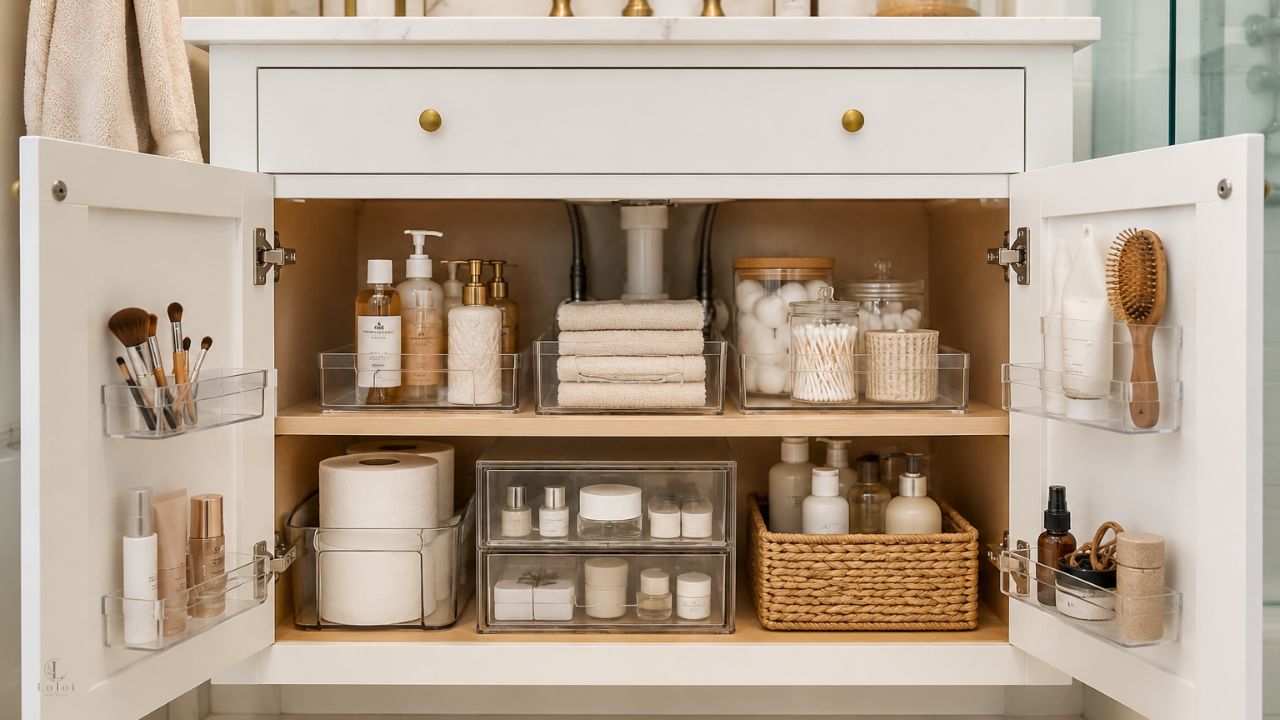
How to Organize Bathroom Cabinet Storage Under the Sink
The under-sink cabinet is often the most challenging area because plumbing interrupts the layout. The trick is to work around the pipes instead of pretending they are not there.
Start by placing taller items on either side of the plumbing. Then use the open center or front area for bins, drawers, or baskets. Avoid packing items directly against pipes where leaks may go unnoticed.
A practical under-sink setup might include:
- Left side: hair tools in a heat-safe bin
- Right side: cleaning supplies in a handled caddy
- Center front: daily skincare drawer
- Back corner: backup toiletries
- Cabinet door: small adhesive bin for floss, razors, or hair ties
For families, keep cleaning products out of reach of young children. Use childproof locks when needed, or store cleaners in a higher utility area instead of under the bathroom sink.
Use a Handled Caddy for Cleaning Products
Bathrooms need regular cleaning, and a small handled caddy makes the process easier. Store only what you use in that bathroom: toilet bowl cleaner, disinfecting spray, glass cleaner, sponge, gloves, and microfiber cloths.
This is especially helpful in larger homes where bathrooms are far apart. Instead of carrying supplies from a laundry room or kitchen cabinet, each bathroom can have a compact cleaning kit.
For small apartments, choose one central cleaning caddy and store it where it fits best. If the bathroom cabinet is tiny, cleaning products may be better in a kitchen sink cabinet, entry closet, or laundry area.
Store Hair Tools Safely
Curling irons, flat irons, blow dryers, and hot brushes take up a lot of cabinet space. They also come with cords that easily tangle.
Use a heat-resistant pouch, metal holder, or divided bin. Let tools cool fully before storing them unless the organizer is specifically designed for hot tools. Wrap cords loosely to avoid damage.
A renter-friendly option is an over-cabinet-door hair tool holder, but check that the door can close properly and the metal hook does not scratch the finish. Add felt pads if needed.
Organizing a Medicine Cabinet
A medicine cabinet should be easy to scan and safe to use. Because many bathrooms are humid, it may not be the best place for every medication. Still, many people use the bathroom for first aid, pain relievers, allergy medicine, and daily supplements.
Group items by purpose:
- Pain relief
- Cold and allergy
- Digestive care
- First aid
- Thermometer and health tools
- Daily prescriptions
- Kids’ medicine
- Vitamins and supplements
Use small bins or shelf risers to prevent tiny boxes and bottles from disappearing behind one another.
Safety Comes First
If children live in or visit the home, store medications in a locked or high location. Do not rely on child-resistant caps alone. Also separate adult and children’s medicine to prevent confusion.
Avoid mixing loose pills, removing labels, or storing medicine in decorative jars. A bathroom cabinet can still look tidy without sacrificing safety or clear information.
How to Organize Bathroom Drawers
Bathroom drawers tend to collect the smallest items: lip balm, bobby pins, tweezers, nail clippers, floss picks, cotton rounds, makeup, and hair ties. Drawer organization depends on shallow, precise compartments.
Start by removing everything and wiping the drawer. Then sort items into categories and choose dividers that match those categories.
A useful drawer layout might include:
- Long compartment for toothbrushes or razors
- Small square compartment for hair ties
- Narrow section for tweezers and nail clippers
- Medium section for daily makeup
- Small cup or tray for cotton swabs
- Back section for less-used grooming items
For a polished look, choose matching organizers. For a budget-friendly approach, use small boxes, repurposed candle jars, ceramic dishes, or washable food storage containers.
Keep Daily Makeup Separate
If you wear makeup most days, create a daily makeup zone instead of mixing everything together. Keep foundation, concealer, mascara, brow products, blush, and brushes in one tray or drawer section.
Special occasion makeup, extra palettes, glitter products, or seasonal shades can go in a separate bin. This prevents your morning routine from becoming a search through products you rarely use.
Small Bathroom Cabinet Ideas
Small bathrooms need ruthless editing and smart vertical storage. In many apartments, condos, older homes, and powder rooms, the vanity cabinet may be the only hidden storage available.
The best small-space strategy is to store less in the bathroom and make every inch count.
Use Vertical Space
Look for stackable drawers, shelf risers, narrow bins, and two-tier organizers. Under-sink space is often taller than it is wide, so stacking can double storage without adding clutter.
Just avoid stacking loose products. Loose stacks become unstable and frustrating. Use drawers or lidded bins when items need to be layered.
Choose Narrow Bins
A few narrow bins often work better than one large bin. They can slide around plumbing, fit beside pipes, and create clearer categories.
For example:
- One bin for dental care
- One bin for hair products
- One bin for skincare
- One bin for backups
When a category outgrows its bin, it is time to edit rather than expand.
Move Bulky Items Elsewhere
Toilet paper, jumbo shampoo bottles, large packs of wipes, and bulk soap refills can overpower a small cabinet. Store extras in a linen closet, bedroom closet, hallway cabinet, laundry area, or decorative lidded basket outside the bathroom.
In a rental with no closet, a slim rolling cart, over-toilet cabinet, or wall-mounted shelf can help, as long as it does not make the room feel crowded.
Bathroom Cabinet Organization for Families
Family bathrooms need durable systems that are easy for everyone to follow. The more people use a bathroom, the simpler the organization should be.
Avoid overly precious setups with too many tiny containers. Instead, create broad zones with clear labels.
Give Each Person a Bin
Individual bins work beautifully for families. Each child or adult gets one container for daily personal items. This reduces arguments, keeps products separate, and makes cleanup easier.
A family cabinet might include:
- Mom’s bin
- Dad’s bin
- Child 1 bin
- Child 2 bin
- Shared dental bin
- Shared hair bin
- First-aid bin
- Backup bin
For young kids, use picture labels or color-coded bins. For teens, use larger bins with enough room for skincare, deodorant, and hair products.
Keep Shared Items Central
Shared items should be easy for everyone to reach. Toothpaste, hand soap refills, extra toilet paper, cotton swabs, and basic first aid can live in the most accessible zones.
Items that require adult supervision, such as medicine, razors, or chemical cleaners, should be stored separately and safely.
Renter-Friendly Bathroom Cabinet Solutions
Renters often deal with dated vanities, limited storage, awkward layouts, or rules against drilling. The right organizers can still make a rental bathroom feel much more functional.
Look for:
- Freestanding bins
- Stackable drawers
- Adhesive door organizers
- Over-cabinet hooks
- Tension shelves
- Removable labels
- Non-slip shelf liners
- Rolling carts
- Over-toilet storage
Avoid permanent hardware unless your lease allows it. If you use adhesive products, choose removable options and test them carefully on a hidden area.
A simple upgrade like a clean shelf liner, matching bins, and a labeled daily-care drawer can make even an older rental vanity feel fresher.
Budget-Friendly Organizing Ideas
You do not need to spend a lot to organize a bathroom cabinet well. Many useful solutions are inexpensive or already in your home.
Try repurposing:
- Small gift boxes as drawer dividers
- Mason jars for cotton balls or hair ties
- Candle jars for makeup brushes
- Shoe boxes for backup products
- Food storage containers for categories
- Small trays for daily skincare
- Tension rods for spray bottles
- Command-style hooks for tools or brushes
Dollar stores, big-box retailers, home improvement stores, and discount home stores often carry affordable bins and drawer organizers. The most important thing is not the brand; it is whether the organizer fits your cabinet and supports your routine.
Make the Cabinet Easy to Clean
Bathrooms collect dust, hair, powder, product residue, and moisture. Organization should make cleaning easier, not harder.
Choose washable organizers when possible. Plastic, acrylic, coated wire, and metal are easy to wipe. Fabric bins can look soft and decorative, but they may absorb moisture and stains in a bathroom setting.
Add a washable shelf liner under products that might leak. This is especially useful under cleaning supplies, hair products, oils, and soap refills.
Plan a quick cabinet refresh every month or two. You do not need to redo everything. Just toss empties, wipe spills, restock basics, and return stray items to their zones.
Common Bathroom Cabinet Mistakes to Avoid
Even a beautifully organized cabinet can fail if the system does not match real life. Avoid these common mistakes.
Buying Organizers Before Decluttering
It is tempting to buy cute bins first, but that often creates more clutter. Declutter and measure before shopping. You may discover you need fewer organizers than expected.
Using Too Many Tiny Containers
Tiny containers look neat at first, but they can become fussy. Use them for truly small items like bobby pins, floss picks, or nail tools. For larger categories, choose bins that are easy to pull out and put away.
Hiding Daily Items Too Deep
If you use something every day, do not store it in the back of a cabinet. Daily-use items should be reachable with one hand.
Keeping Too Many Backups
A backup supply is helpful. A two-year supply in a tiny bathroom is not. Limit backups to what fits in your assigned storage area.
Ignoring Moisture
Bathrooms are humid. Avoid storing delicate paper packaging, excess medicine, or moisture-sensitive products in the steamiest cabinet. Use ventilation, close lids tightly, and choose easy-clean containers.
Forgetting Labels
Labels are especially useful in shared bathrooms. They do not need to be fancy. A simple label maker, chalk label, or handwritten sticker can help everyone maintain the system.
Style Matters, Too
Bathroom cabinet organization is mostly practical, but style still matters. A cabinet that looks calm and intentional is more enjoyable to use.
You can create a more polished look by choosing a consistent material or color palette. Clear acrylic feels clean and modern. White plastic looks crisp and budget-friendly. Bamboo adds warmth. Wire baskets can work in farmhouse, cottage, or industrial-style bathrooms. Soft gray or beige bins blend nicely with neutral decor.
In guest bathrooms or powder rooms, a styled cabinet can make visitors feel cared for. Keep extra toilet paper, hand towels, soap, feminine care products, and basic toiletries easy to find. A small labeled “guest essentials” bin is thoughtful without being overdone.
Product Comparison: Which Organizer Should You Choose?
Different organizers solve different problems. The best choice depends on your cabinet size, budget, and household needs.
| Organizer Type | Best For | Pros | Cons |
|---|---|---|---|
| Clear bins | Everyday categories and backups | Affordable, visible, easy to clean | Can look cluttered if overfilled |
| Stackable drawers | Under-sink vertical space | Adds storage layers, renter-friendly | Must fit around plumbing |
| Turntables | Bottles and jars | Easy access to back items | Can waste space in narrow cabinets |
| Pull-out baskets | Deep vanities | Convenient and sturdy | May cost more or require installation |
| Door organizers | Small bathrooms | Uses hidden space | Must not block shelves |
| Drawer dividers | Makeup and grooming tools | Keeps small items neat | Requires accurate measurements |
| Handled caddies | Cleaning supplies or shared items | Portable and practical | Takes up floor or cabinet space |
For most bathrooms, a mix works best. You might use clear bins for categories, a stackable drawer under the sink, a door organizer for small daily items, and dividers in the top drawer.
A Simple Step-by-Step Bathroom Cabinet Plan
If your cabinet feels overwhelming, follow this simple order.
Step 1: Empty Everything
Take every item out. Do not organize around clutter. Starting fresh helps you see the space clearly.
Step 2: Clean the Cabinet
Wipe shelves, drawers, doors, and corners. Let everything dry before replacing products.
Step 3: Sort by Category
Group similar items together. This reveals duplicates, expired products, and categories that need better storage.
Step 4: Edit Ruthlessly
Keep what you use, need, and have room to store. Let go of products that are expired, irritating, broken, or forgotten.
Step 5: Assign Zones
Decide where daily items, occasional items, backups, medicine, cleaning supplies, and personal bins will live.
Step 6: Add Organizers
Use bins, drawers, dividers, risers, or door storage based on your cabinet measurements.
Step 7: Label and Maintain
Labels help everyone return items to the right place. Do a quick refresh every few weeks to keep the system working.
FAQ
What is the best way to organize a bathroom cabinet under the sink?
Work around the plumbing by using narrow bins, stackable drawers, or pull-out baskets on either side of the pipes. Keep daily items near the front, backups toward the back, and cleaning supplies in a handled caddy. Avoid storing products directly against pipes so leaks are easier to spot.
Should medicine be stored in a bathroom cabinet?
Some medicine can be stored in a bathroom cabinet, but humidity and heat may affect certain products. Always follow the storage instructions on the label. For long-term storage, many medications are better kept in a cool, dry, secure place away from children and pets.
How do I organize a small bathroom cabinet with no drawers?
Use stackable drawers, clear bins, shelf risers, and door-mounted organizers to create sections. Keep only daily essentials in the cabinet and move bulky backups elsewhere. Narrow containers usually work better than large bins in small vanities.
What should not be stored in a bathroom cabinet?
Avoid storing excess medication, important documents, delicate jewelry, moisture-sensitive electronics, and large bulk supplies in a humid bathroom cabinet. If the bathroom has poor ventilation, consider keeping backups and sensitive products in a hall closet or bedroom storage area.
How can I make my bathroom cabinet look nicer?
Choose matching or coordinated organizers, remove packaging when practical, use labels, and avoid overfilling bins. Clear, white, bamboo, or neutral-toned containers can make the cabinet feel cleaner and more intentional.
How often should I clean out my bathroom cabinet?
A quick refresh every month or two is ideal. Toss empty packaging, wipe spills, check backups, and return items to their zones. Do a deeper declutter every six months, especially for medicine, sunscreen, makeup, and skincare.
What is the best organizer for renters?
Freestanding clear bins, stackable drawers, over-cabinet holders, removable adhesive bins, and drawer dividers are great renter-friendly options. They improve storage without permanent changes and can move with you to your next home.
How do I stop my bathroom cabinet from getting messy again?
Make the system easy to follow. Store daily items in the most accessible spots, use broad categories, label shared bins, and limit backups to one area. If putting something away takes too much effort, the system is probably too complicated.
Conclusion
A well-organized bathroom cabinet is not about perfection. It is about creating a space that supports the way you actually live. Whether you have a roomy double vanity in a family home or one small cabinet in a rental apartment, the right system can make your mornings calmer, your products easier to find, and your bathroom feel more pulled together.
Start by clearing out what you no longer need, then build simple zones around your daily routines. Choose organizers that fit your cabinet, your budget, and your household. Once everything has a clear place, the bathroom becomes easier to maintain—and much more enjoyable to use every day.